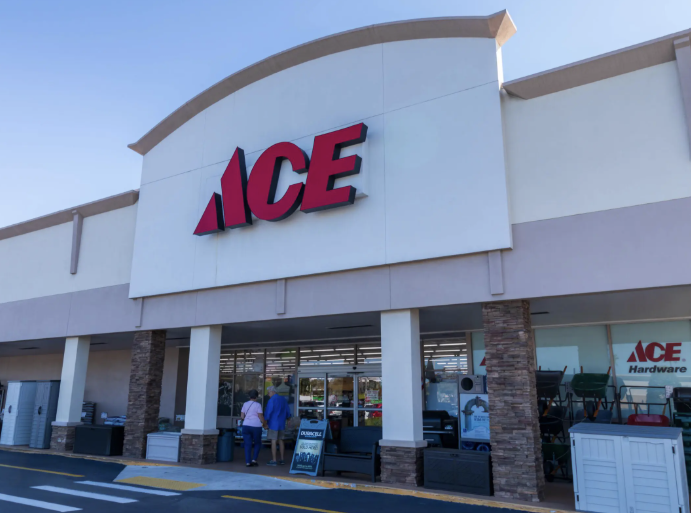

If you’re a product manufacturer looking to expand your reach, increase sales, and build a stronger brand, selling to major retailers can be a powerful growth strategy. Getting your product onto the shelves or websites of national retail chains can put your brand in front of millions of potential customers while creating opportunities for larger orders, greater brand credibility, and long-term retail growth.
While breaking into major retail can be challenging, the potential benefits can far outweigh the investment required to get there. Unlike relying solely on direct-to-consumer or marketplace sales, retail distribution can give product brands access to established customer bases, valuable sales data, national exposure, and additional opportunities to grow through other retail and distribution channels.
In this article, we’ll explore seven reasons why selling your product to major retailers can accelerate growth and help take your brand to the next level. Or, listen to our latest podcast on this very subject.
Key Takeaways
- Retail placement puts your product in front of an audience you could not buy access to, and it borrows the retailer’s credibility on day one.
- The distribution, logistics and marketing machinery already exists. You are renting infrastructure it would take years to build.
- Order sizes change the shape of your business. Margins can strengthen over time through volume, but only if the landed cost was right before the first order.
- Retail gives you data you cannot get anywhere else, on who buys, where and how often, and that data improves every other channel you sell through.
- The costs are real and mostly invisible up front. Compliance, the working capital gap, deductions, allowances and returns all sit between the purchase order and the profit.
- The right first retailer is the one whose customer already matches yours and whose order you can fund, not the largest one you recognize.
Thinking About Selling Your Product to Major Retailers?
Let’s discuss your product, pricing and retail strategy.
Are You Ready for Retail Yet
Before the reasons, the readiness check. Answer each of these yes or no as things stand today, not as you intend them to be.
– Barcodes. Do you have GS1 barcodes registered to your own company, with a unique code for every variant and size?
– Insurance. Do you hold product liability insurance, and do you know the coverage amount major retailers in your category require?
– Packaging. Does your package sell the product on a shelf, with no person beside it, to a shopper who has never heard of you and gives it two seconds?
– Landed cost. Can you state what one unit costs you, delivered to your warehouse, to the penny, including freight, duty and packaging?
– Capacity. Could you produce and ship an order several times larger than your biggest to date, on a date somebody else chose?
– Cash. Could you fund that order out of cash or credit and then wait to be paid on extended terms?
– Proof of demand. Does the product already sell somewhere, to people who are not friends, with reviews or sales records you could show a stranger?
– A named target. Can you name the retailer you want, the category it would sit in, and the products it would sit next to? Several no answers do not mean retail is closed to you. They mean the next few months are preparation rather than pitching, and that is a far better position than it feels like. What you cannot do is take an unprepared product to a buyer and hope enthusiasm covers the gaps. Buyers remember who wasted their time, and a bad first meeting usually costs you a year with that retailer rather than a month.
1. Boost Your Brand Exposure and Visibility
Getting your product onto the shelves of well-known retailers immediately elevates your brand’s visibility. Large retailers attract millions of shoppers each month—people who may have never encountered your brand otherwise. When consumers see your product alongside trusted national brands, it instantly increases credibility and recognition.
Why this matters:
Higher visibility can lead to greater product discovery, repeat purchases, and long-term brand loyalty.
Exposure is not automatic. A product on a shelf that nobody looks for sells slowly, and slow sell-through ends a retail relationship faster than a rejection does. The retailer supplies the traffic. Getting that traffic to stop at your shelf is still your job, and the plan for doing it is part of what a buyer is judging.
2. Leverage Established Distribution Channels
Building your own distribution network takes time, money, and operational expertise. Major retailers already have these systems perfected. By tapping into their logistics and distribution infrastructure, you can scale faster without the heavy investment of building your own network.
Benefits include:
- Faster time-to-shelf
- Reduced shipping and warehousing costs
- Streamlined supply chain operations
This allows you to focus more on innovation, marketing, and product strategy—rather than operational headaches.
3. Dramatically Increase Your Sales Volume
Major retailers move massive amounts of product daily. Selling through them gives you access to high-volume orders and ongoing restock cycles.
Higher volume means:
- Increased revenue
- Lower cost-per-unit manufacturing
- Stronger negotiation power with suppliers
For many brands, retail sells more units in one month than their DTC or Amazon sales do in an entire quarter.
Pro Tip: Model the order you are hoping for before you pitch for it. Take your largest order to date, multiply it by ten, and work out what that costs in materials, production time and storage, and when the cash leaves versus when it comes back. Brands that skip this get the ‘yes’ they asked for and then cannot ship it.
4. Build Instant Trust and Brand Credibility
Consumers often trust the brands they see on shelves at retailers like Target, Walmart, Best Buy, or Costco. Being stocked in these stores signals that your brand meets rigorous quality and performance standards.
This credibility can help:
- Convert skeptical shoppers
- Increase purchase confidence
- Establish your brand as an authority in your category
When customers trust where they buy, they’re more likely to trust what they buy.
Pro Tip: Use your first placement as evidence the same week it happens. A single retailer’s yes makes every subsequent conversation easier, with other retailers, with distributors and with suppliers negotiating your terms. Most brands wait until the sales figures arrive, by which time the momentum is gone.
5. Strengthen Your Profit Margins Over Time
Although retailers do take margins, selling in larger quantities helps offset these deductions. As your production volume increases, your cost per unit typically drops—meaning your overall profit margin can actually improve.
Major retail partners can also help reduce:
- Warehousing costs
- Shipping fees
- Inventory risk
For many brands, scaling through retail becomes far more profitable than relying on online sales alone.
What Selling to a Major Retailer Really Costs
Seven reasons in favor and nothing against reads like a pitch, so here is the other side. Retail costs money before it makes money, and most of the cost is invisible until you are in it.
Setup costs. GS1 barcodes, product liability insurance at the coverage level the retailer requires, safety and compliance testing for your category, packaging redesign for a shelf rather than a shipping box, and electronic data interchange so you can trade with the retailer’s systems at all. None of these are optional and all of them land before your first purchase order.
The working capital gap. You pay for materials, production and freight, then deliver, then wait for payment on the retailer’s terms. That gap is the largest single financial risk of a retail program, and it gets wider as the orders get bigger. A large first order is a cash problem before it is a revenue event.
Deductions, chargebacks and penalties. Retailers deduct from your invoice for late deliveries, incorrect labeling, wrong case packs, missed delivery windows and paperwork errors. These are normal, they are largely preventable, and they are reliably underestimated by brands who have never had one.
Promotional funding and allowances. Advertising contributions, promotional discounts, new store allowances and retail media spend. Some are negotiated, some are expected, and all of them come off the price you thought you agreed.
Returns. Damaged, unsold and customer-returned product, handled under whatever return policy is in your agreement. Budget a provision for it from the first order, not after the first deduction.
Management attention. The one nobody prices. Retail pulls senior time away from the channels currently paying your bills, often for months before a purchase order arrives. If your direct or online business only works because the founder is on it every day, retail will cost you there first.
Retail suits a brand with a product that already sells somewhere, a landed cost that leaves room for a retailer’s margin, capacity to make more than it currently sells, and either cash or credit to fund the gap between shipping and being paid. If two or more of those are missing, the honest answer is not yet. Waiting a year and arriving ready beats arriving now and failing in front of a buyer who will remember it.
| Cost area | What it covers | When it hits |
| Compliance setup | Barcodes, insurance, testing, documentation | Before you apply |
| Systems | Electronic trading and portal setup | Before the first order |
| Packaging | Retail-ready packaging and case packs | Before the first order |
| Working capital | Producing the order before you are paid | At the first order |
| Deductions and penalties | Chargebacks, freight and delivery performance | Ongoing, after you ship |
| Allowances and promotion | Whatever you committed to in the pitch | Ongoing |
| Returns | Provision for unsold or returned stock | Ongoing |
| Attention | Management time taken from paying channels | Throughout |
Pro Tip: Quote from landed cost at retail volume, never from your current wholesale price. Your existing wholesale price was built for a different order size, a different freight profile and no deductions. Repricing after a purchase order is far harder than pricing correctly before one, and it is the single most common reason a first retail relationship loses money.
6. Tap Into Major Retailers’ Powerful Marketing Machines
One of the biggest advantages of working with big retailers is the exposure you gain through their marketing initiatives. Many retailers offer:
- In-store promotions
- Featured product placements
- Email blasts
- Digital ads
- End-cap opportunities
- Retail media network ads
These programs amplify your brand without requiring the massive advertising budgets otherwise needed to reach a national audience.
7. Access Valuable Sales Data and Consumer Insights
Big retailers collect robust data on shopper behavior, buying patterns, price sensitivity, and product performance. Many share this data with vendors.
This insight allows you to:
- Identify emerging trends
- Refine product features
- Improve packaging
- Adjust pricing strategies
- Optimize inventory planning
In short, data empowers your brand to make smarter decisions and stay ahead of your competitors.
Pro Tip: Ask what reporting you get, and how often, during the negotiation rather than after the launch. Sell-through data store by store is worth more than the first order, because it tells you which regions to support and which to fix before the buyer’s review, and brands that ask for it late find out at the review instead.
How to Get Your Product Into Retail Stores, the Short Version
The seven reasons above explain why retail is worth doing. This is the route, compressed. Each step is a discipline of its own and each one links to the guide that covers it properly.
1. Get retail ready before you talk to anyone. GS1 barcodes registered to your company, product liability insurance in place, packaging that sells on a shelf with nobody standing next to it, a landed cost you can state to the penny, and capacity to make an order several times larger than any you have filled. A buyer who likes your product and finds you unprepared does not wait for you to catch up.
2. Pick the retailer whose shopper already matches yours. Not the biggest name you recognize. The one whose customer is already buying products like yours, in a category where your product plainly belongs, at a store count you can actually supply.
3. Find the buyer for your exact category. Retailers do not have one buyer, they have dozens, each responsible for a narrow slice of the assortment. Emailing the company gets you nowhere. Identifying the individual who owns your category, and reaching them through the vendor portal, a distributor, a rep or a trade show, is the whole game.
4. Build the pitch around the category, not the product. Buyers are measured on what their category does. Your job is to show what changes for them if they stock you: a shopper they are not currently converting, a price point missing from the shelf, a margin better than the incumbent, or growth in a subcategory they are losing.
5. Submit through the retailer’s actual route, and expect a wait. Most major retailers run a supplier portal or new item submission process, and most review categories on a fixed calendar rather than whenever a submission arrives. Silence after a submission is normal.
6. Negotiate the whole deal, not the wholesale price. Payment terms, delivery windows, returns, promotional funding, chargebacks and marketing commitments all move real money. A good wholesale price attached to bad terms is a bad deal.
7. Plan the launch before the first order ships. Sell-through in the first weeks decides whether there is a second order. Store-level execution, staff awareness and a plan for slow stores matter more here than anything you did to win the listing.
Which Retailer Should You Approach First
The right first retailer is almost never the largest one you can name. It is the one whose shopper already matches yours, whose order size you can fund without borrowing against the business, and whose category needs what you make. Start there, prove sell-through, then use that record to open bigger doors.
Use this to route yourself:
Mass and discount retailers. Broad consumer products at accessible price points, in categories a family buys without thinking hard. They test you on price, on national supply and on packaging that survives high-volume handling.
Home improvement retailers. Hardware, tools, building products, lawn, garden and outdoor. They test you on whether the product serves their professional customer or their do-it-yourself customer, and on whether you can hit a seasonal reset window.
Club stores. Multipacks, bundles and value-per-unit propositions. They test you on cost, on pallet-ready presentation and on whether you can support an enormous order at a very thin margin.
Electronics and technology retailers. Consumer electronics and connected products. They test you on technical support, on returns rates and on whether your product needs floor staff to explain it.
Sporting goods retailers. Outdoor, fitness and activity products. They test you on seasonality and on whether the brand means anything to their shopper before they see the price.
Pet specialty retailers. Hardlines for pets, such as toys, carriers, bowls, beds and grooming tools. They test you on category expertise and on whether your product solves a problem the store’s staff hear about every day.
Hardware cooperatives. Independent stores buying through a shared organization. They test you on whether the product works for a small-format store, and they are often the most accessible first step for a brand with limited capacity.
Military retail. Exchange and commissary systems serving service members and their families. They test you on process, on compliance and on patience with a procurement route that works differently from commercial retail.
Live shopping and television retail. Products that demonstrate well and have a story a host can tell in a few minutes. They test you on whether you can produce a large quantity fast when a segment sells out.
| If you sell | Start with | What they will test you on |
| Everyday mass-market goods | Walmart or Target | Demand evidence and supply at scale |
| Hardware and home improvement | Home Depot, Lowe’s or Ace Hardware | Pallet economics and category fit |
| Bulk-friendly, high-value items | Costco | Club pack economics and member value |
| Consumer electronics and accessories | Best Buy | Attach rate and support burden |
| Sporting goods and fitness | DICK’S Sporting Goods | Seasonality and compliance, including RFID |
| Pet products | PetSmart, Petco or Chewy | Category regulation and repeat purchase |
| Durable, value-led goods | Military exchanges | Origin documentation and trade compliance |
| Visibly demonstrable products | QVC | Demonstrability and funding the minimum order |
If two or three of these fit, take the one where you can name the shopper, name the category and fund the order. That is the one that will actually ship.
Conclusion: Selling to Major Retailers Is a Smart, Scalable Growth Strategy
Selling your products to major retailers offers long-lasting benefits: increased brand awareness, higher sales volumes, improved margins, and access to invaluable shopper data. While navigating retail can be complex, the payoff can be transformative for your business.
If you’re ready to bring your product into major retailers but need help navigating the process, Retailbound can guide you every step of the way. Schedule a free consultation with one of our retail experts and discover how to get your product retail-ready, connect with the right buyers, and drive long-term retail growth.
Frequently Asked Questions
How can I get my products into retail stores?
Get retail ready first, meaning barcodes, insurance, packaging, capacity and a landed cost you can state precisely. Then pick the retailer whose customer already matches yours, reach the buyer for your exact category rather than the company generally, and build the proposal around what the category gains rather than what your product does.
How do you pitch your product to retailers?
Lead with the category, not the product. Show what the subcategory sells today, what your item adds that the existing range does not, your retail price and margin at the retailer’s volume, and the evidence that it already sells somewhere. Name the item you expect to replace, because a buyer is allocating fixed space rather than adding to it.
Are big-box stores worth it?
For the right product, yes, and the deciding factor is rarely the product. It is whether you can fund an order several times larger than any you have shipped, hold price through deductions and allowances, and support sell-through once you are on the shelf. Brands that can clear those three usually find the channel transformative. Brands that cannot usually find it expensive.
What are the disadvantages of big-box stores?
For a supplier the main ones are financial and operational. Extended payment terms create a working capital gap, deductions and penalties reduce what you actually receive, promotional commitments come out of your margin, and slow sell-through can end a relationship quickly. There is also a concentration risk in letting one account become most of your revenue.
How do I get my product in big box stores?
The route is the same for all of them and the detail differs by retailer. Clear retail readiness, choose the chain whose shopper matches your product, reach that chain’s category buyer through its supplier route or through a distributor or representative, and time the approach to the category review calendar rather than to your own readiness.
About the Author
Yohan Jacob, President and Founder of Retailbound, has helped product brands grow and scale in over 150+ retailers across the U.S. and Canada. Retailbound is a full-service retail channel management consultancy specializing in bridging the gap between product creators and retailers. Whether you’re a startup or a fast-growing brand, Retailbound provides expert retail strategy, buyer introductions, channel marketing support, and sales management to help you thrive both in-store and online.