Advice
Meet Robert Bruza – Retailbound’s Director of Business Development
Retailbound's Director of Business Development on who he works with, what product brands get wrong, and how a retail placement really happens.
 Yohan Jacob
13 min read
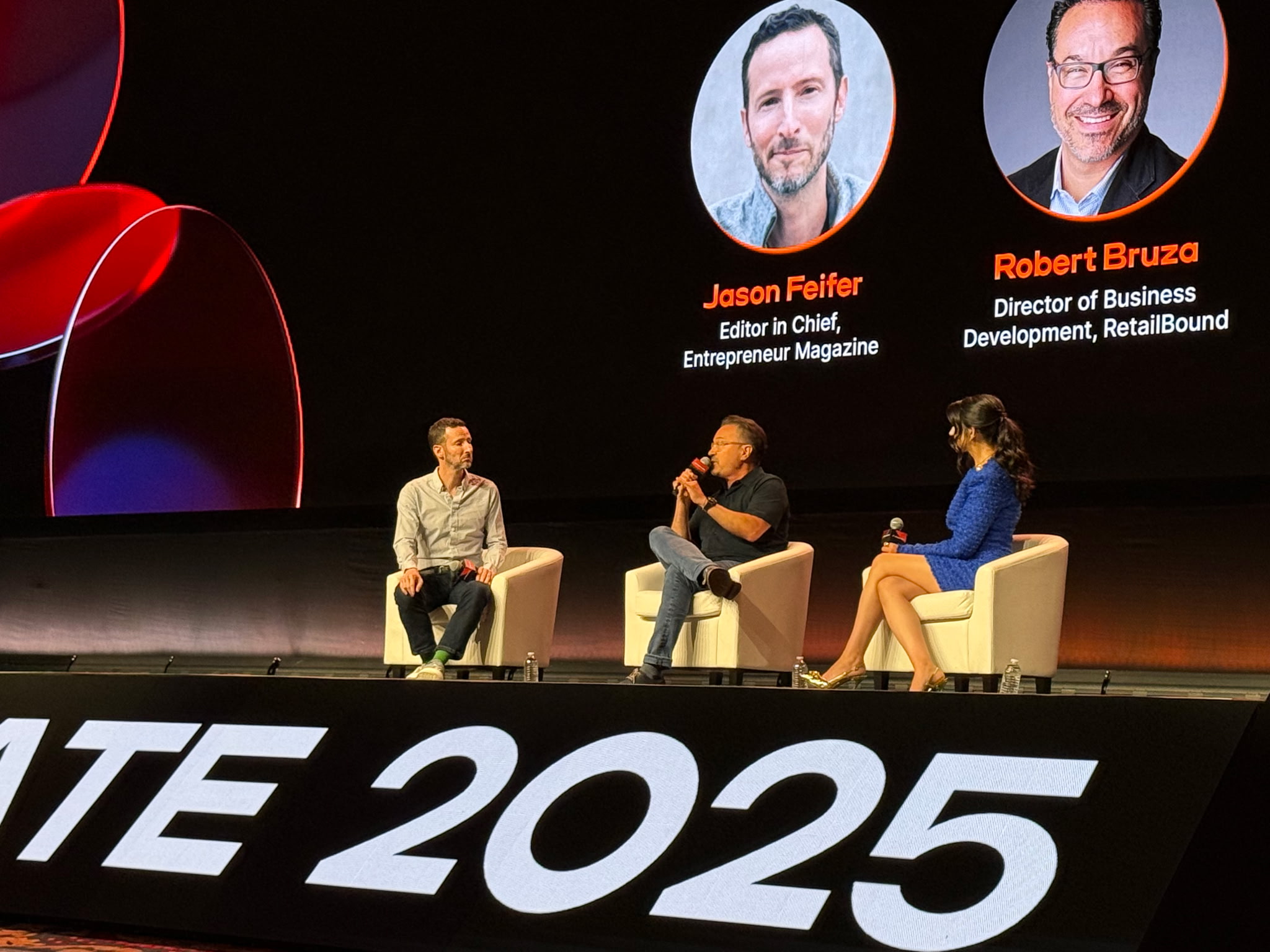
In a few weeks, Robert Bruza marks four years as Retailbound’s Director of Business Development. The time has flown by.
In those years, Robert has traveled the world to meet product makers who want to scale their brands with US retailers. His deep retail experience, and his passion for it, make him a key part of the Retailbound team.
This month we sat down with him for the Robert Bruza Retailbound interview. We asked about his mission, his view of the retail industry, and what drives his work at Retailbound.
Key takeaways
- Robert Bruza is Retailbound’s Director of Business Development. He works with product makers who want to scale their brands with US retailers.
- He has spent over fifteen years connecting companies with the services that help them grow, in the US and abroad.
- His mission is to bring high-quality retail consulting to brands that need a route onto shelves, not more advice.
- The work starts with one question: is the brand ready for the retailer it has in mind? The introduction comes later.
- Retailbound helps startups and growing brands with retail channel strategy. That means matching the product, and the company’s stage, to the right retailers.
What’s your personal mission and objective at Retailbound?
My first goal is to bring high-quality retail consulting to startups and early-growth companies that want to crack the retail code.
Many new brands sell direct to consumer, on Amazon, or are just starting out. Most of them don’t fully grasp the value and complexity of today’s retail ecosystem. My mission is to help them make smarter go-to-market decisions.
Long term, I want to help Retailbound grow its service offerings so we can support more startups. The road into retail is hard and expensive. The earlier a brand prepares for it, the better it will do.
That covers funding and product development, then distribution, channel diversification, and retail growth. Our goal is to be a one-stop retail solutions agency for brands that are serious about success.
What excites you about working at Retailbound, and how did you first hear about it?
I first found Retailbound on social media. Yohan Jacob and his team were already known as a trusted, connected, results-driven retail agency.
What excites me most is that the job uses everything I’ve learned across business. For over fifteen years, I’ve connected strong companies with the services that help them grow, in the US and in Europe.
Retailbound is the premier retail channel management agency on the market today. It lets me offer a proven, high-quality solution that helps companies reach their retail goals.
But what really drives me is working with startups and early-stage brands. Over the past decade I’ve co-founded five startups. I’ve built investor decks, written go-to-market plans, and raised capital. Helping the next wave of founders is very rewarding.
Earlier in my career I was a retail buyer and a retail leasing agent. I sat across the table from brands and saw what it takes to win in retail. That passion still drives me today.
How would you describe Retailbound in one sentence?
“A retail solutions agency that helps companies not just enter retail, but succeed in it.”
Who Robert works with, and who he does not
The fastest way to waste everyone’s time is a call with a brand that is two years away from what it’s asking for. Here is who this work suits, and who it doesn’t suit yet.
A good fit
- Consumer product brands in hardlines. The product exists, can be made at volume, and is wanted on US retail shelves.
- Founders who will do the prep work, or have someone who will. That means the costing, the sell sheet, and the packaging changes a retailer asks for. An introduction is worth nothing if the brand can’t show up ready.
- Companies at the stage where a buyer introduction would help. The product is finished, the cost structure works, and there is capacity to fill an order if one lands.
- Brands with some proof that shoppers choose the product. Direct sales, marketplace results, independent accounts, reviews. It doesn’t need to be a lot. It needs to be something a buyer can look at.
- Companies that want to build a retail channel on purpose, rather than hoping one big retailer solves everything.
Not a fit yet
- Concepts without a product. If it’s a drawing, a prototype or a patent, the retail talk is too early. Spend the money on finishing the product.
- Brands that want someone to sell for them, with nobody inside to support the accounts that follow. Retail placements create work, and that work lands on the brand.
- Companies whose unit economics can’t survive a retail margin. If the numbers only work at direct-to-consumer prices, retail will lose money at any volume. No introduction fixes arithmetic.
- Anyone who needs revenue this quarter. Retail runs on category review calendars. Those don’t move for anybody’s cash flow.
- Softlines, apparel, food, consumables, and health and beauty brands. Retailbound works in hardlines. The right advice here is to find someone who knows those categories well.
The second list is mostly about timing, not quality. Most brands on it become a good fit later, sometimes within a year. The product gets finished, the cost comes down, or there are a few accounts to point at. Hearing “not yet,” with the reason attached, is more useful than being sold a program that was never going to work.
How do you see the retail industry evolving, and where does Retailbound fit in?
As Mark Twain once said, “The reports of my death are greatly exaggerated.” The same goes for brick-and-mortar retail.
People keep predicting its decline. Yet retail sales keep rising and physical stores keep opening. The future of retail is not one channel. It’s a smart blend of revenue streams: in-store, online, mobile, and more.
Media spans TV, streaming, radio, and social platforms. Retail now spans eCommerce, physical stores, catalog sales, cable shopping, and rewards programs in the same way.
Retailbound helps brands find their way in this multi-channel world. We make sure they build the right mix for long-term retail success.
The questions product brands ask Robert most
Five questions come up in almost every first talk Robert has with a product brand. Here are his short answers.
Am I ready for retail? Probably not yet, and that’s normal. Ready means four things. The product is finished. The packaging works on a shelf. You know your cost per unit. And you could fill an order without putting the company at risk. Most brands who ask me this have done the first two and not the last two. Fix those and you’re ahead of most brands a buyer sees. Then spend some time on choosing the right retailer for your product.
Which retailer should I start with? Usually a smaller one than you want. The right first retailer is one where your product fits an existing category. Your shopper already shops there. And the order is a size you can fill with ease. Start there and you get a sell-through number. Every larger retailer is going to ask you for that anyway.
How long does this take? It depends on the category review calendar. That’s not me dodging the question. Retailers look at a category on a fixed schedule. Until that window opens, nothing moves, no matter how good the product is. Find out when your category is reviewed, then work backward. That date sets the pace, not your timeline.
What does it cost to support a retail account? More than brands expect. And the biggest piece is not a fee. It’s cash. You make the order, you ship it, and then you wait for the retailer’s payment cycle. Add compliance, freight and the deductions that show up against invoices. The real question is whether you can fund that gap. Work that number out before you agree to a quantity, not after.
What if the first order does not sell through? Then you find out why, fast. Was it placement, price, packaging, or the wrong shopper in the wrong store? Retailers will usually tell you what they saw. That information is worth having even if the account doesn’t survive. A placement that failed for a reason you understand beats never being on a shelf at all.
How is Retailbound different from other retail agencies?
Retailbound isn’t a distributor, a manufacturer’s rep, or a digital marketing firm. We’re a team of former big-box retail buyers. We know how retail works, and what it takes to get products on shelves and keep them there.
Pro tip
When you compare retail agencies, ask each one a direct question. Which of your target retailers have they placed a product with, in your category, in the last two years? Ask for the category, not the client name. Category experience is what transfers. A relationship in a different department of the same chain usually does not.
That insider knowledge helps brands crack the retail code faster than traditional agencies can.
What Robert does for a product brand
Brands who talk to Robert want to know what actually happens if they sign up, not what the agency believes. Here is the work itself. It helps to know how products get on store shelves first. Each step below fits into that cycle.
He tells you whether you’re ready for the retailers you have in mind. This is the first conversation, and often the most useful one. The answer is often “not yet.” He looks at the product, the packaging, the cost structure, and what the company can make and support. Then he shows you the gaps against the retailers you named. A brand that hears this early fixes four things and goes in strong. A brand that doesn’t hear it spends a year getting rejected without being told why.
He works out which retailers and channels actually fit. Most brands arrive with a list built from ambition, not fit. Robert narrows it to the retailers where the product belongs in an existing category. Where the shopper already shops for this kind of thing. And where the order size is one the company can fill without breaking itself. Part of that is understanding retailer and distributor roles, and which one you need first. Often this means starting smaller than the brand had in mind. That advice saves the most money and is the least fun to hear.
He gets the pitch and the costing right before a buyer sees either. The sell sheet, the line sheet, the margin structure, the case pack. The answers to the questions buyers always ask. Pricing your product for retail is part of this step. It all happens before any introduction is made. A buyer meeting is a one-shot event. A brand that arrives without its costing doesn’t get a second one.
He makes the introduction. Retailbound has spent years building relationships with retailers, distributors and sales reps. Robert uses them. What changes for a brand is speed. Instead of filing through a portal and waiting to learn if anyone looked, you’re in front of a person who takes the call because of who made it. The route is different at each chain. That’s why we publish guides on how to get your product into Ace Hardware and how to get your product into Target.
He tells you what it will take to support the account before you sign it. Working capital, capacity, compliance, logistics, and the deductions that arrive once product ships. A brand can’t see this part from the outside. It decides whether a first order becomes a business or a cash flow crisis.
He stays with it after the first order. A first purchase order is not a win. It’s a test with a clock on it. The work after placement is sell-through, replenishment, the reorder conversation, and whatever the retailer measures you against. Turning one order into a second is a different job from getting the first. It’s where most brands who got in end up getting out.
Retailbound works on retainer, not commission. That’s worth knowing because it changes the advice you get. Nobody here earns more by sending you to a retailer you’re not ready for.
Note
An introduction to a buyer is the easiest part of this work, and the least useful on its own. What decides the outcome is everything done before it. The costing, the packaging, the timing against a category review window, and an honest read of whether the brand can service the account it’s asking for.
Robert’s background
Several people named Robert Bruza have public profiles. To be clear, this is Robert Bruza, Director of Business Development at Retailbound, the retail channel management consultancy based in the United States.
Robert has spent over fifteen years connecting strong companies with the services that help them grow. He has worked with businesses in both the United States and Europe. Over the past decade he has co-founded five startups, built investor decks, written go-to-market strategies and raised capital. That’s why his talks with early-stage founders often cover funding and sequencing as well as retail. Earlier in his career he was a retail buyer and a retail leasing agent. So he has sat on the other side of the table from the brands he now represents. At Retailbound he travels to meet product makers around the world who want to scale their brands with US retailers.
The short version:
- Director of Business Development at Retailbound
- Former retail buyer and retail leasing agent
- Co-founder of five startups over the past decade
- Over fifteen years connecting companies with growth services across the US and Europe
- Focus: startups and early-growth consumer product brands entering US retail
Pro tip
Before any first call, have three things to hand. Your landed cost per unit. Your current lead time and minimum order quantity. And the names of two or three retailers you believe you belong in. Those three answers decide most of what a first conversation can cover. Arrive without them and a working call turns into an interview.
Free consultation
Talk to a retail expert about your product.
We build the retailer list, the pricing model, and the buyer pitch, so your first meeting starts from your numbers instead of theirs.
Retainer only, no commission · 150+ retailers · No obligation
Frequently asked questions
For a product brand, it means help getting a product onto retailers’ shelves and keeping it there. That covers assessing readiness, choosing the right retailers and channels, preparing the costing and the pitch, making the introduction, and supporting the account once the first order lands. It’s different from the enterprise retail consulting the large firms do. That work advises retailers, not the brands selling to them.
Test for two things. Has the agency placed products in your category with the retailers you’re targeting? And will they tell you when you’re not ready? Introductions are easy to promise. Preparation, an honest readiness check and support after the first order are what decide whether a placement survives.
They decide, with you, which retailers and channels your product and your company’s stage can support. Then they prepare everything a buyer will weigh before the introduction is made. The strategy part is choosing where to aim. The channel part is making sure the operations behind it can carry an order once it arrives.
Both, and the work differs. An early-stage brand usually needs readiness work first: costing, packaging, compliance and capacity. Only then does a retailer conversation make sense. An established brand more often needs the right introductions and help scaling into more accounts.
Work through what a buyer’s process will test anyway. Can you make the volume that retailer orders? Can you fund the inventory until they pay? Does your packaging work on a shelf? Do you have barcoding and the compliance paperwork for your category? Is there someone in your business who can answer a buyer the same week? Any “no” is a reason to start at a smaller tier, not a reason to stop.