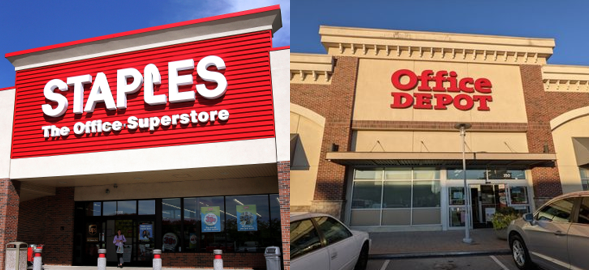

Getting your product onto the shelves of a major retailer is a defining milestone for any consumer brand. Retail placement delivers instant credibility, massive exposure, and daily access to thousands of new shoppers. But moving from a successful direct-to-consumer (DTC) brand to a retail-ready business requires more than demand—it requires a fundamentally different approach.
Retail buyers evaluate thousands of brand pitches every year. They are trained to quickly identify founders who are unprepared for wholesale, scaling, and operational execution. To earn their trust—and their shelf space—you must speak their language, understand their priorities, and position your brand as a low-risk, high-return partner.
Below is a proven framework to help you pitch retail buyers with confidence, credibility, and clarity.
1. Shift Your Pitch From Product Features to Retail Profitability
One of the most common mistakes early-stage brands make is focusing too heavily on product details. While customers may care about sourcing, materials, or design innovations, retail buyers are focused on something else entirely: profit per square foot.
Retail buyers are risk managers. Their job is to ensure every SKU on the shelf contributes to category growth and margin performance. When you pitch, you are not just selling a product—you are presenting a business case.
Reframe your product features into retail outcomes:
- Instead of: “We use the most durable packaging in the category.”
- Say: “Our reinforced packaging reduces in-store damage and returns, protecting margins and maintaining shelf integrity.”
- Instead of: “Customers love our flavor.”
- Say: “Our high online repurchase rate indicates strong repeat demand, which can help drive consistent store traffic.”
Show that you understand the retailer’s category goals. Are they trying to increase basket size? Win a younger customer? Differentiate from online competitors? Position your brand as a solution to their problem—not just your own growth goals.
2. Master the Retail Metrics Buyers Care About
Nothing signals “unprepared startup” faster than a founder who doesn’t know their numbers. Retail buyers expect brands to understand wholesale economics and retail KPIs well beyond topline revenue.
Before your buyer meeting, be prepared to confidently discuss:
- Velocity: Expected units sold per store, per week. Use benchmarks from comparable retailers or adjusted DTC data.
- Margins: Wholesale cost, suggested retail price (SRP), and the retailer’s margin requirements.
- Customer Acquisition Cost (CAC): How much you spend to acquire customers online—and how that investment will translate into in-store demand.
Retail buyers want proof that you’ve done the math. A realistic, data-backed financial model signals operational maturity and reduces perceived risk.
3. Present a Retail-Specific Go-to-Market Strategy
One of the biggest concerns buyers have when working with emerging brands is stagnant inventory. Shelf space is expensive, and retailers cannot afford products that rely on passive demand.
Do not simply ask for shelf placement. Show buyers how you plan to drive sell-through.
A strong retail pitch includes a detailed, retailer-specific go-to-market plan:
- In-Store Support: Product demos, sampling programs, coupons, or shelf talkers.
- Digital Activation: Leveraging social media, email marketing, and paid ads to drive traffic to specific store locations.
- Promotional Calendar: Planned discounts, seasonal spikes, and promotional cadence.
When you present a complete retail activation plan, the conversation shifts from “should we try this brand?” to “how do we execute this growth strategy together?”
4. Prove Your Operational Readiness
Even the best product and marketing strategy will fail if your operations can’t keep up. Retailers expect brands to ship on time, in full (OTIF), and in compliance with strict vendor requirements.
Address operations proactively in your pitch:
- EDI Compliance: Confirm that you are EDI-ready or actively onboarding.
- Supply Chain Stability: Lead times, production capacity, and backup manufacturing options.
- Retail Compliance: Familiarity with routing guides, vendor manuals, and labeling requirements.
By addressing logistics upfront, you reassure buyers that you understand the complexity of retail execution—and that you are prepared for scale.
5. Use Social Proof and DTC Data to Reduce Buyer Risk
If you don’t yet have a long retail track record, your DTC performance becomes your strongest proof point. Retail buyers rely on data, not assumptions.
Use your existing traction to validate demand:
- Geographic Demand: “Forty percent of our online orders ship to the Northeast, aligning with your regional store footprint.”
- Customer Reviews: Highlight review volume and common keywords like “value,” “quality,” or “repeat purchase.”
- Sell-Out Signals: Share waitlists, pre-orders, or online sell-outs to demonstrate urgency.
If you are already selling through smaller retailers or boutiques, bring that sales data. Success in one retail environment is often a strong predictor of success in another.
6. Treat a “No” as a Strategic Opportunity
Experienced retail professionals understand that a “no” is rarely final—it usually means “not yet.” New brands often take rejection personally or disengage too quickly.
If a buyer declines, shift immediately into learning mode. Ask what benchmarks you need to hit to be reconsidered. Clarify timing, category fit, or format adjustments that could improve your chances in the future.
Handling rejection with professionalism leaves the door open. Many successful retail partnerships begin with an initial “no” that turns into a “yes” once the brand proves readiness.
Conclusion: Pitch Like a Retail Partner, Not a Startup
Transitioning from a startup to a retail-ready brand is a major leap—but one that becomes far more achievable with the right preparation. When you focus on profitability, master retail metrics, and demonstrate operational strength, you position your brand as a valuable long-term partner.
Retailers aren’t just looking for innovative products. They are looking for brands that can help grow categories, increase margins, and execute flawlessly.
When you pitch with data, strategy, and confidence, you stop sounding like a risky startup—and start sounding like the next brand worth betting on.
Ready to take your product to retail? Contact Retailbound to schedule a discovery call and begin your journey toward retail success.
About the Author
Yohan Jacob is the President and Founder of Retailbound, a retail channel management consultancy that helps brands launch and scale in over 150 retailers across the U.S. and Canada.
Retailbound specializes in bridging the gap between product creators and retailers by offering end-to-end support including retail strategy development, buyer engagement, sales management, and channel marketing. Whether working with emerging startups or established brands, Retailbound provides expert guidance to expand retail presence, strengthen buyer relationships, and drive sustainable sales growth both in-store and online.