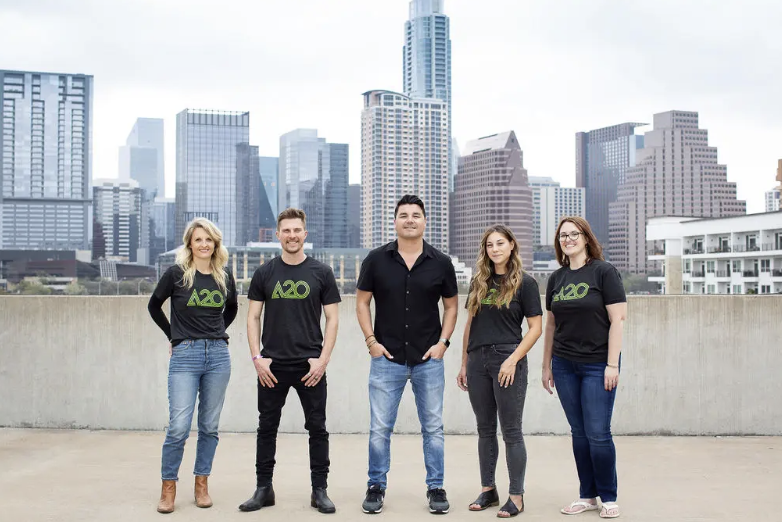
Once a quarter, we sit down with a client or agency partner to explore trends, strategies, and lessons learned in the product-launch ecosystem. This quarter, we’re excited to spotlight Jonathan Chaupin, Founder and CEO of Agency 2.0—an Austin-based, full-service crowdfunding marketing agency that has supported Kickstarter and Indiegogo campaigns since 2010. Their team handles marketing, PR, copywriting, design, advertising, video production, retail strategy, and fulfillment for product launches.
About Agency 2.0: What’s Your Role at the Company?
“I’m one of the original co-founders of Agency 2.0—the first dedicated crowdfunding marketing agency ever created,” Jonathan shares.
He notes that his role covers many areas, pulling from years of experience launching a wide range of products on Kickstarter and Indiegogo.
“One of my favorite parts of the job is meeting entrepreneurs for the first time. It’s a bit like a quick version of Shark Tank—they pitch their product, and I offer insights to determine whether we’re a good fit to work together. I’ve met some of the brightest, most creative founders during these calls.”
Evaluating New Clients: What Do You Look For? What Are the Red Flags?
As a full-service digital marketing agency, Agency 2.0 receives many inbound inquiries from product brands. Jonathan explains how the crowdfunding landscape has evolved—and what his team looks for before taking on a campaign.
“In the early days, campaigns often launched with rough prototypes and only a general idea of manufacturing costs. After years of shortfalls and failed deliveries across the industry, today’s successful crowdfunding campaigns are far more developed. Many brands are close to production—or already have inventory ready to ship. Delivery windows that used to be 9–12 months are now closer to 6–9 months.”
Key Green Flags Jonathan Looks For
- Prototype readiness / development stage
- Clear MSRP and Kickstarter pricing strategy
- Sufficient advertising budget
- Strong value proposition and product benefits
Common Red Flags (Even Retailers Avoid These)
- Copycat or “me-too” products
- No patentable or protectable features
- Oversaturated or highly competitive categories
- Weak product-market fit
- Unrealistic or inflated price points
Is Crowdfunding Still Worth It for New Product Brands?
Jonathan believes that Kickstarter and Indiegogo remain powerful tools for product validation and early financing—but expectations have changed.
“The market is more competitive, and backers expect reassurance that the product is real and will ship on time,” he explains.
Despite the crowded landscape, crowdfunding still offers major advantages:
Why Crowdfunding Is Still a Strong Launch Strategy
- Built-in exposure from Kickstarter/Indiegogo traffic
- Proof of concept before mass production
- Extended delivery windows, giving startups more flexibility than traditional e-commerce
- Financing for first production runs based on campaign demand
“If you launch on your own website, customers expect quick delivery or refunds. Crowdfunding gives startups the breathing room to do due diligence, refine manufacturing, and plan logistics efficiently.”
Balancing Work and Life as a Serial Entrepreneur
While Jonathan isn’t yet a husband or father, he is an uncle and has learned the importance of managing time intentionally.
“I’m most productive between 10 a.m. and 2 p.m., so I schedule important meetings and tasks during those hours. Many CEOs do the same—they plan work around their peak energy.”
Jonathan’s Time-Management Tips for Startup Founders
- Create both personal and work calendars
- Batch important tasks during peak performance hours
- Work smarter, not harder
- Set deadlines—and stick to them
- Build a strong team and refine internal processes continually
“It really comes down to efficiency. A solid, well-structured process is key to any company’s success.”
Working Together: Agency 2.0 and Retailbound
Retailbound and Agency 2.0 have collaborated on several mutual clients. Jonathan highlights what sets Retailbound apart.
“Retailbound’s leadership—starting with Yohan—brings genuine care and partnership. They’re not just trying to place you in stores; they’re committed to your long-term success.”
He also emphasizes Retailbound’s deep industry knowledge and proactive approach.
“They engage clients early to help them prepare for retail outreach. For our clients, we introduce them to Yohan and his team early to align on MOQ, sales expectations, and marketing objectives before we launch.”
If you’re ready to bring your product into major retailers but need help navigating the process, Retailbound can guide you every step of the way. Schedule a free consultation with one of our retail experts and discover how to get your product retail-ready, connect with the right buyers, and drive long-term retail growth.