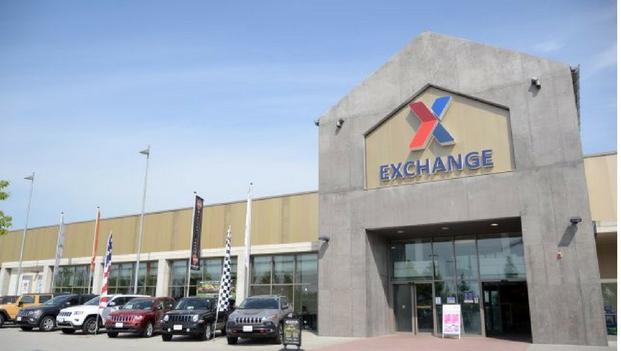
For innovative consumer product brands looking to expand beyond traditional retail channels, military exchanges can be an attractive and often overlooked sales opportunity. The Army & Air Force Exchange Service (AAFES) is one of the largest military retail organizations in the world, serving millions of active-duty service members, veterans, retirees, and military families through stores and online channels worldwide.
Getting your product into AAFES and other military exchanges can give your brand access to a highly targeted and loyal customer base while creating opportunities to sell across military installations in the U.S. and abroad. However, selling through military retail is different from selling to major civilian retailers such as Walmart, Target, Costco, or Kroger. Brands need to understand the military exchange structure, vendor requirements, buyer expectations, and purchasing process before approaching a buyer.
In this 2026 vendor guide, we’ll explain how AAFES and military exchanges work, what buyers look for, and the key steps product manufacturers should take to become an approved vendor and get their products on military retail shelves and online.
Key Takeaways
- AAFES operates more than 4,900 locations in over 30 countries, including PX and BX stores, convenience and fuel sites, specialty retail, uniform stores, food concepts and ShopMyExchange.com.
- AAFES is one exchange system among several. The Navy, Marine Corps and Coast Guard run their own, and commissaries are a separate grocery system again, each with its own vendor route.
- Exchange retail is not government contracting. An exchange buys and resells your consumer product. Federal procurement is a different process for goods the military itself uses.
- Compliance carries more weight here than in commercial retail. Berry Amendment and trade compliance, packaging and labeling standards, and electronic data interchange are entry conditions.
- The customer is targeted and loyal but shops on value. Competitive pricing, quality, durability and everyday utility are what performs in military retail.
- The registration route and the partner systems are different things. You reach the first with no relationship. You are given access to the second during onboarding.
Thinking About Selling Your Product Through AAFES and Military Exchanges?
Let’s discuss your product, pricing and retail strategy.
What Is AAFES?
The Army & Air Force Exchange Service (AAFES) is a Department of Defense retail organization that operates stores and e-commerce platforms serving military communities around the world.
Unlike traditional retailers that focus solely on profit, AAFES has a mission-driven purpose. Revenue generated by AAFES helps fund military Morale, Welfare, and Recreation (MWR) programs that support service members and their families.
AAFES Retail Footprint
AAFES operates more than 4,900 locations in over 30 countries, including:
- PX (Post Exchange) stores
- BX (Base Exchange) stores
- Convenience and fuel locations
- Specialty retail stores
- Military apparel and uniform stores
- Food and service concepts
- ShopMyExchange.com, AAFES’ global e-commerce platform
Who Shops at AAFES?
AAFES serves a highly engaged customer base that includes:
- Active-duty military personnel
- National Guard members
- Reserve personnel
- Military retirees
- Veterans
- Military spouses and families
Military consumers often prioritize value, durability, convenience, and trusted brands. Once they find products they like, they tend to be highly loyal customers.
Selling to An Exchange is Not Government Contracting
Two completely different routes get called selling to the military, and confusing them costs brands months. If you are holding a consumer product, only one of them is yours.
Exchange retail. An exchange buys your product at wholesale and resells it to authorized shoppers through its stores and its website. It works the way any other retail relationship works. There is a category buyer, an assortment they are responsible for, a purchase order, a margin they need to make, and a vendor setup process you complete once you are accepted. Nobody bids. You are being evaluated as a supplier of goods for resale, and the questions are retail questions: does it sell, does it make money, can you ship it reliably. This guide covers that route.
Government contracting. A federal agency procures goods or services for its own use, for example equipment, uniforms, facilities work or support services. That runs through federal registration and a formal solicitation process with published requirements and responses, and it has its own registrations, its own vocabulary and its own timelines. It is a legitimate route and a large one. It is simply not how a consumer product reaches a shelf in a base exchange.
If what you want is your product in front of service members and their families as shoppers, stay on the exchange retail route described here. If you are selling something for the military itself to use rather than for its people to buy, that is the contracting route and this guide is not the map for it.
AAFES is One Exchange System, Not All of Them
AAFES is the one most brands have heard of, and it is the reason many brands assume military retail is a single door. It is not. The exchange system is a set of separate organizations, each serving different branches, each with its own buyers, its own vendor route and its own requirements. A brand that treats them as one entity either pitches the wrong organization or assumes approval in one place counts everywhere. Neither is true, and the second assumption is the more expensive of the two.
There is also a distinction that trips up almost everyone new to this channel. Exchanges sell general merchandise. Commissaries are a separate system entirely, focused on groceries, and operated under a different organization with a different supplier process. They sit on the same installations and serve the same shoppers, which is exactly why they get confused.
| Organization | Who it primarily serves | What it is | Vendor route |
| Army & Air Force Exchange Service (AAFES) | Army and Air Force installations | General merchandise retail, plus e-commerce | Its own prospective supplier registration |
| Navy Exchange Service Command (NEXCOM) | Navy installations | General merchandise retail, plus e-commerce | Its own supplier process and buying team |
| Marine Corps Exchange (MCX) | Marine Corps installations | General merchandise retail, run under Marine Corps Community Services | Its own vendor submission process |
| Coast Guard Exchange (CGX) | Coast Guard installations | General merchandise retail | Its own vendor submission process |
| Defense Commissary Agency (DeCA) | All branches | Grocery, not general merchandise | A separate process again, usually through a distributor or broker |
Start with AAFES. It is the largest general merchandise target of the group, and this article has already described the scale of its footprint. The compliance work you do to satisfy it, meaning barcodes, packaging standards, country of origin documentation and electronic trading setup, carries across to the others almost intact, which means the second exchange you approach is a far shorter conversation than the first.
Is Your Product a Good Fit for AAFES?
Before approaching military retail buyers, evaluate whether your product aligns with the needs of military shoppers and AAFES merchandising goals.
1. Deliver Strong Value
Products that perform well in military retail typically offer:
- Competitive pricing
- Exceptional quality
- Durability and reliability
- Everyday utility
- Strong consumer demand
2. Solve a Problem or Fill a Market Gap
Visit ShopMyExchange.com and review products currently offered in your category.
Ask yourself:
- Does your product offer a unique feature?
- Does it solve a consumer problem better than competitors?
- Is there a gap in the current assortment?
- Can you provide stronger margins or pricing?
A compelling value proposition is often the key to securing buyer interest.
How to Become an AAFES Vendor
Step 1: Register Through the AAFES Vendor Portal
All prospective suppliers must begin by registering through the official AAFES vendor application system.
During registration, you’ll typically submit:
- Company information
- Product details
- Product catalog
- Sales and distribution information
- Contact information
This serves as the initial introduction between your company and the AAFES buying team.
The Portals You Will Meet and Which One is Yours
Three different systems come up when brands search for the AAFES vendor portal, and they do completely different jobs. Knowing which one you are looking at saves a great deal of wasted effort, because the most common mistake here is a brand deciding it has been rejected when it has simply been looking at the wrong screen.
The registration route. This is where a brand with no existing relationship starts. It is reached from the prospective supplier pages and it exists to collect your company details, your product information and your contact data so a category buyer can see what you sell. You do not need credentials to use it. If you have never sold to an exchange before, this is the only one of the three that applies to you today.
The partner systems. Once a relationship exists, day to day business runs through separate partner platforms that handle purchase orders, invoices, shipping notices and other trading documents. Access is issued to you as part of vendor onboarding after you are accepted. These are operational systems, not front doors, and they will not let a prospective supplier in.
Product information management. Item attributes, descriptions, images and specification data live in a product information system that is separate again. It matters enormously once you are stocked, because it drives how your product appears online, but it is the last of the three you will touch.
If you hit a login screen and have no credentials, that means you have not been set up yet, not that you have been turned down. Go back to the registration route and let the process reach you.
Step 2: Complete the Vendor Consideration Process
AAFES buyers require detailed product information before evaluating a new vendor.
Be prepared to provide:
- Wholesale pricing
- Suggested retail pricing (MSRP)
- UPC codes
- Product specifications
- Case pack information
- Shipping dimensions
- Country of origin
- Product images
Pro Tip: Submit for a named category rather than for the exchange generally. Your submission is routed to a category buyer, so naming the department, the shelf and the item you expect to sit beside gets it to a person instead of into a queue. A general submission is the most common reason a good product goes unanswered.
Step 3: Buyer Evaluation
Once submitted, your information is reviewed by the appropriate category buyer.
Buyers evaluate:
- Consumer demand
- Product uniqueness
- Competitive landscape
- Margin opportunities
- Category fit
- Supply chain capabilities
Keep in mind that military retail review cycles can be slower than traditional retail channels, so patience and persistence are important.
What Happens After You Register and How Long it Takes
Registration is a submission, not a decision. What follows is a sequence of stages, some of them fast and some of them dependent on a review calendar you cannot see, and knowing the shape of it stops a brand from resubmitting its way to the bottom of a queue.
The honest answer on timing is that no single number describes it. Military retail review cycles run longer than civilian ones, and the length of any given stage depends on where the category sits in its own buying calendar, how many vendors are under review in that category, and whether your submitted data was complete enough to evaluate without a follow up. Complete, accurate data is the one variable you control, and it is the one that most often decides whether you wait once or three times.
| Stage | What actually happens | What moves it along | What you should be doing |
| Registration | Your company and product details enter the supplier system | A complete, accurate submission | Verify every field before you send |
| Vendor consideration | Detailed product data, pricing, UPCs, case packs and images are gathered | Having all of it ready in one package | Assemble it before you are asked, not after |
| Category routing | Your submission is directed to the buyer who owns the category | Correct category identification on your part | Nothing, this stage is internal |
| Buyer evaluation | The buyer weighs demand, differentiation, margin and supply against the current assortment | The category’s own review calendar | Start the compliance work, not a follow up email |
| Samples and costing | Samples, revised costing or additional specification are requested | A fast, accurate response from you | Ship promptly and answer completely |
| Compliance onboarding | Country of origin, labeling, barcodes and electronic trading setup are verified | Work you have already done | Close any remaining gaps |
The quiet stages are routing and buyer evaluation. Resubmitting during them does not speed anything up and it can make a brand look disorganized. Use that time to finish the work that will otherwise delay you later: confirm your barcode data, check your country of origin documentation against Berry Amendment and Trade Agreements Act requirements for your category, and get your electronic data interchange capability in place so that acceptance is not followed by another wait.
AAFES Compliance Requirements
Military retail vendors must meet strict operational and compliance standards.
Berry Amendment and Trade Compliance
Depending on the product category, certain goods may be subject to:
- Berry Amendment requirements
- Trade Agreements Act (TAA) regulations
- Country-of-origin restrictions
Understanding these requirements early can help avoid costly delays.
Pro Tip: Get your country of origin documentation and trade compliance position confirmed in writing by your manufacturer before you register, not after a buyer asks. Origin rules are the one requirement in military retail that cannot be fixed with a packaging change, and a brand that discovers a sourcing problem at the compliance stage usually has to switch suppliers to proceed.
Packaging and Labeling Standards
AAFES products often travel through complex domestic and international supply chains.
Your packaging should:
- Withstand extended shipping conditions
- Meet all regulatory requirements
- Include proper UPC barcodes
- Follow AAFES shipping guidelines
Electronic Data Interchange (EDI)
AAFES requires suppliers to support Electronic Data Interchange (EDI) for:
- Purchase orders
- Invoices
- Advanced shipping notices
- Order tracking
If your company does not currently support EDI, you may need to work with a third-party EDI provider.
Building Relationships Within Military Retail
While the vendor application process is important, relationships often play a major role in long-term success.
Attend Military Retail Trade Shows
Industry events such as those hosted by military retail organizations provide opportunities to:
- Meet category buyers
- Showcase products
- Learn about upcoming initiatives
- Build credibility within the military retail community
Face-to-face interactions can help accelerate the buying process.
Partner With a Military Retail Expert
Many brands choose to work with retail consulting firms, brokers, or agencies that understand military retail.
Experienced partners can help:
- Position your product effectively
- Navigate AAFES requirements
- Connect with the right buyers
- Develop a military retail strategy
Approval by one exchange is not approval by the others, but the work is not wasted. The compliance groundwork, origin documentation, labeling standards and electronic trading capability largely carry across, so a brand that clears one system is in a much stronger position approaching the next. Treat the first approval as the expensive one.
How to Increase Sales Once You’re Accepted
Getting approved is only the first step. Long-term success depends on driving strong sell-through.
Invest in In-Store Promotions
Work with buyers to secure merchandising opportunities such as:
- End-cap displays
- Seasonal promotions
- Feature placements
- Special military-themed events
Promotional calendars are often planned months in advance, so early planning is essential.
Optimize Your Online Listings
AAFES’ e-commerce platform continues to grow and can provide significant sales opportunities.
Improve online performance by focusing on:
- SEO-friendly product titles
- Keyword-rich product descriptions
- High-quality images
- Competitive pricing
- Positive customer reviews
Connect Authentically With Military Consumers
Military shoppers appreciate brands that genuinely support the military community.
Consider:
- Military appreciation initiatives
- Partnerships with veteran organizations
- Military family support programs
- Authentic brand storytelling
Avoid marketing tactics that appear opportunistic or insincere.
Pro Tip: Build your military audience plan around the installation, not around a national campaign. Base newspapers, installation events, spouse networks and on-base promotions reach this shopper where a general awareness spend does not, and the sell-through that follows is measured store by store, which is exactly how the buyer will review you.
Common Mistakes Brands Make When Selling to AAFES
Even great products can struggle if execution is poor.
Weak Logistics
Late shipments, inventory shortages, and damaged products can quickly damage supplier relationships.
Pro Tip: Price and plan for overseas shipping before you quote, because a meaningful share of these locations are outside the United States. Lead times, documentation and freight cost to an overseas installation are different from a domestic distribution center, and a brand that quotes a single domestic landed cost finds the gap after the first international order.
Uncompetitive Pricing
AAFES customers expect strong value. Pricing that is significantly higher than competing channels may limit sales.
Ignoring Compliance Requirements
Failure to meet labeling, EDI, shipping, or sourcing requirements can delay product launches and create unnecessary costs.
Expecting Immediate Results
Military retail often operates on longer planning cycles than traditional retail. Brands that remain patient and committed are typically better positioned for long-term success.
Final Thoughts
AAFES offers product manufacturers access to one of the most loyal consumer audiences in the world. With thousands of retail locations, a growing e-commerce platform, and a global military customer base, military retail can become a valuable channel for long-term growth.
Success requires more than simply submitting a product for consideration. Brands must demonstrate strong product-market fit, maintain operational excellence, meet compliance requirements, and build meaningful relationships within the military retail ecosystem.
For brands that are prepared to invest in the process, selling through AAFES can provide a powerful opportunity to expand distribution, increase brand awareness, and generate sustainable retail growth.
Ready to Launch in Military Retail?
If you’re looking to expand into AAFES or other military retail channels, working with an experienced partner can significantly improve your chances of success.
If you’re ready to bring your product into major retailers but need help navigating the process, Retailbound can guide you every step of the way. Schedule a free consultation with one of our retail experts and discover how to get your product retail-ready, connect with the right buyers, and drive long-term retail growth.
Frequently Asked Questions
How can I become an AAFES vendor?
Register through the AAFES prospective suppliers route, complete the vendor consideration process with full product detail, and submit for a named category so it reaches the right buyer. Have your compliance position ready first, including country of origin documentation, packaging and labeling standards and electronic data interchange capability.
How to sell products to the military?
There are two different answers and it matters which one you need. Selling a consumer product to service members and their families means exchange retail, through AAFES or another exchange system. Selling goods or services the military itself uses means federal procurement, which is a separate registration and solicitation process.
How to sell products on military bases?
Through the exchange serving that installation rather than through the installation itself. An exchange buys your product and sells it through its stores and website to authorized shoppers. Which exchange you approach depends on which service the installation belongs to, since AAFES, the Navy, the Marine Corps and the Coast Guard each run their own.
What do military exchanges sell?
General merchandise across most of the categories a department store or mass retailer carries, plus uniform and military-specific items, convenience and fuel, and food and service concepts. Groceries are handled separately by the commissary system. For a brand, that means most consumer product categories have a route in.
Who is eligible to shop at a military Exchange?
Eligibility covers active-duty service members, retirees, veterans and military families, with specific rules set by the exchange systems. For a vendor, this matters because it defines the customer base and it is why value, durability and everyday utility matter more in this channel than a premium positioning would elsewhere.
About the Author
Yohan Jacob is the President and Founder of Retailbound, a retail channel management consultancy that helps brands launch and scale across 150+ retailers in the U.S. and Canada. Retailbound specializes in retail strategy, buyer engagement, sales execution, and omnichannel growth for both emerging and established product brands.