
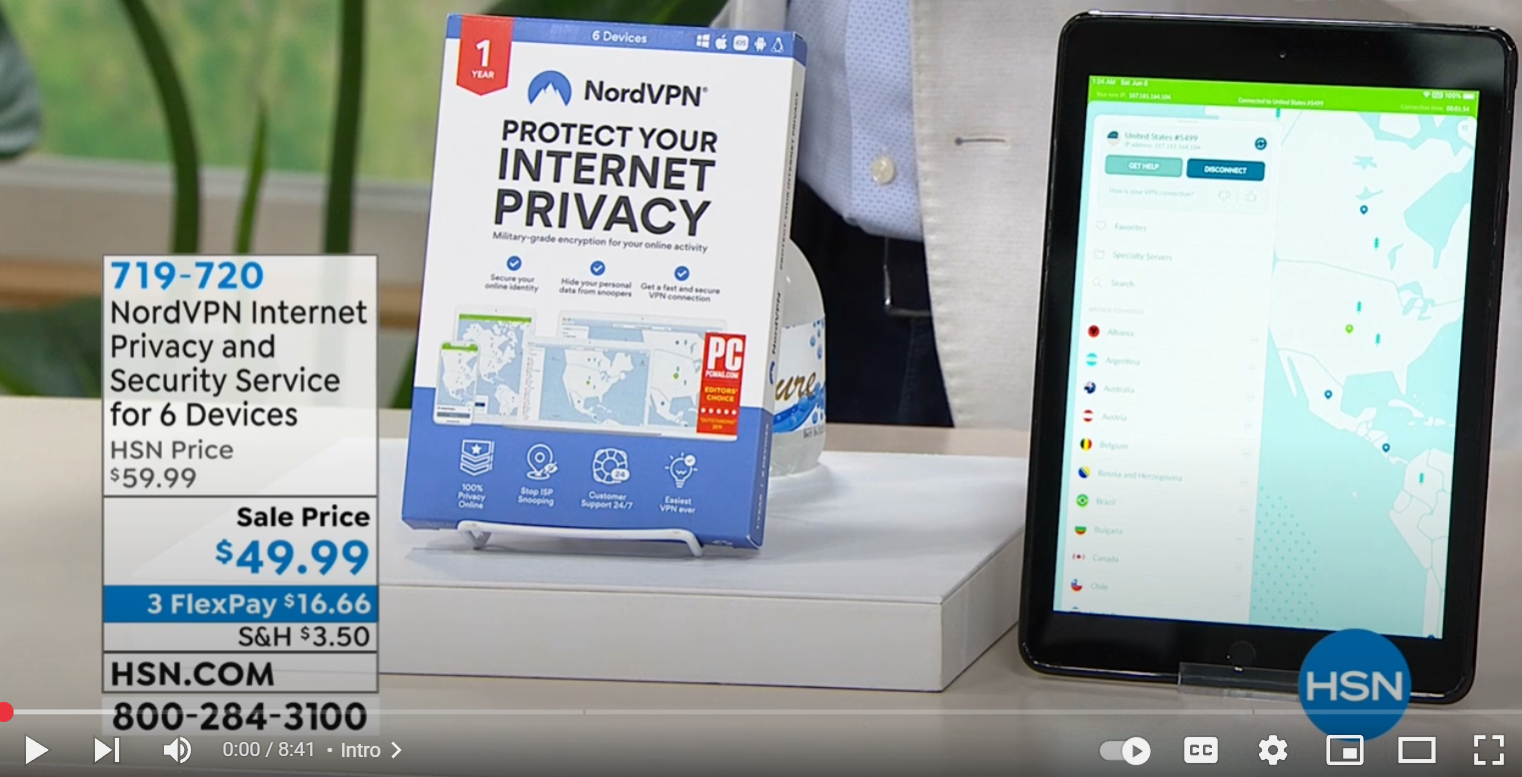
Getting your product featured on-air at HSN can put your brand in front of millions of potential customers, but getting there is about much more than simply submitting a product. HSN looks for innovative, unique products that solve a problem, appeal to its audience, and can be demonstrated effectively on television and digital platforms. A compelling product story and the ability to communicate your product’s benefits clearly can also make a significant difference.
So, how do you get your product on HSN? In this guide, we’ll walk you through the key steps — from determining whether your product is a good fit for HSN and preparing your retail presentation to submitting your product, pitching HSN buyers, and preparing for an on-air opportunity. If you’re an emerging product brand looking to expand beyond ecommerce and into television shopping, understanding how HSN evaluates products can help you approach the opportunity more strategically.
Key Takeaways
- HSN is part of the Qurate Retail Group, which also owns QVC. The two have separate buying teams and separate submission routes.
- Air time is the scarce resource in television retail, and a repeat airing is earned by how a product performs in the minutes it is given.
- Inventory generally has to be in position before an airing, so the cash exposure comes before the revenue rather than after a purchase order.
- A product that cannot be demonstrated visibly on camera is not a fit, regardless of how well it sells elsewhere.
- The host presents the product, so your story has to work in somebody else’s words as well as your own.
- Retailbound helps brands launch and scale their products in over 150 retailers across the US and Canada.
Want to Get Your Product on-air at HSN?
Let’s discuss whether your product is ready for retail.
Understanding HSN and Its Audience
HSN, part of the Qurate Retail Group that also owns QVC, is a shopping channel that broadcasts a wide variety of products, from beauty and fashion to electronics and home goods. With a loyal and diverse audience, HSN offers a unique opportunity for manufacturers to showcase their products to a broad customer base.
HSN’s audience is typically comprised of individuals looking for new, innovative, and exclusive products. Popular categories often include fashion, beauty, electronics, and home improvement items. Knowing HSN’s audience can help you tailor your product and marketing strategy to increase your chances of getting selected.
HSN selects products based on several criteria, including uniqueness, market demand, and alignment with current trends. They are keen on products that solve problems or offer added value to their customers. Having a product that fits well into these categories can increase the likelihood of being chosen for an on-air feature.
Television Retail is a Different Business Model
The most common mistake brands make with HSN is treating it as a retailer that happens to have a screen instead of a shelf. Television retail runs on a different commercial model, and almost every decision you make as a vendor follows from that difference rather than from anything in a normal retail playbook.
| Television retail | Shelf retail | |
| Scarce resource | Minutes of air time | Shelf space and facings |
| How you are judged | Sales per minute on air | Units per store per week |
| Cash position | Inventory usually in place before the airing | Inventory ships against a purchase order |
| Who presents the product | A host, working from your material | The packaging, on its own |
| Eligibility test | Can it be demonstrated visibly on camera | Does it fit the planogram and the category |
| What earns the next one | Performance in the minutes you were given | Sell-through against the space you occupy |
The first consequence is that air time is genuinely finite in a way that shelf space is not. A shelf holds your product all day whether anyone looks at it or not. A broadcast hour holds one product at a time, and every minute you are given is a minute taken from something else. That scarcity is why performance is measured against the clock and why a slow segment is expensive to everyone involved.
The second consequence is the cash position. In traditional retail, a purchase order tells you exactly how many units to make and who is paying for them. In television retail you are typically expected to have inventory ready before the airing, sized against what the network expects the segment to do. If the segment sells out, you may not be able to restock in time for a repeat. If it underperforms, you own the remainder. Both outcomes are yours.
The third is that somebody else does the selling. A host presents your product, live, using what you gave them. Your brand story has to survive being told by a person who met your product recently and is holding it for a few minutes on camera. If the story only works when the founder tells it, it will not work here.
Put those together and the honest summary for a small brand is this. One good airing is not a business, because it is a single event with a finite audience. But one bad airing can end the relationship, because the network is allocating scarce time and the data on your segment is unambiguous. The asymmetry is the thing to plan around.
Preparing Your Product for HSN
Before pitching to HSN, it’s crucial to thoroughly research and understand their requirements. Spend time watching HSN segments to get a feel for the types of products they feature and their presentation style. Understanding their specifications can help you align your product with their standards.
Packaging plays a vital role in catching the attention of both HSN buyers and viewers. Your product should be visually appealing and easy to understand at a glance. Make sure your packaging is professional, informative, and reflective of your brand’s identity.
Pricing is another critical aspect to consider. Research similar products on HSN to ensure your pricing is competitive. HSN often includes special offers or discounts during broadcasts, so factor this into your pricing strategy to ensure profitability while enticing viewers to make a purchase.
Is Your Product Demonstrable on Camera
The opening of this guide notes that HSN looks for products that can be demonstrated effectively on television. That is not a preference, it is a filter, and it is applied early. Before you spend time on a submission, apply it yourself. Work through these honestly, with your product in front of you.
- Can the benefit be seen, rather than described? If understanding the product requires a sentence of explanation and no visible proof, it will struggle.
- Does something visibly change during the demonstration? A mess becomes clean, a mechanism opens, a load is lifted, a space is organized. A visible change is the single strongest asset a televised product can have.
- Can it be shown in the time available, without cutting away? If your demonstration needs a wait, a charge cycle, a drying time or an off-camera setup, it does not fit the format.
- Does it work on the first attempt, every time? Live television is unforgiving. A product that works almost every time will fail on air eventually, and the failure is the part that gets remembered.
- Can somebody who is not you demonstrate it after a briefing? The host will be doing this, not you. If the demonstration depends on knowing exactly how to hold it or exactly where to press, rework it.
- Is there a before and after? A comparison the viewer can see in one shot does more work than any description of features.
If you are answering no to several of these, the honest conclusion is that this is not a channel problem you can pitch your way out of. Plenty of genuinely good products do not televise well: items whose value is in durability, in a material specification, in a warranty or in long-term cost saving are all hard to show in minutes. Those products sell perfectly well on a shelf, on a specification sheet or through a knowledgeable associate, and pushing them into television retail usually produces one poor segment rather than a breakthrough.
What you can change: the demonstration, not the product. A purpose-built demonstration kit, a staged before and after, a visible test that proves a claim, a cutaway that shows what happens inside. Plenty of products that seemed undemonstrable became televisable because somebody designed the demonstration rather than just handing over the product. What you cannot change is a benefit that only reveals itself after weeks of use. If that is what your product is for, put your effort into a channel that can carry that argument.
Pro Tip: Film your own demonstration on a phone, in one unbroken take, with no talking over the parts that do not work. Then watch it with the sound off. If the benefit is not obvious without narration, the demonstration is not ready, because a television audience is frequently watching with divided attention and a host cannot rescue a product that shows nothing.
Pitching Your Product to HSN
Creating a compelling pitch is essential when approaching HSN. Your pitch should clearly highlight the unique features and benefits of your product. Demonstrate how it solves a problem or enhances the customer’s life. Remember, the goal is to convince HSN that your product will resonate with their audience.
Reaching out to HSN requires a strategic approach. You can submit your product through HSN’s online submission portal or attend trade shows where HSN buyers are present. Networking with industry insiders and engaging through social media can also open doors to pitching opportunities.
Avoid common mistakes in your pitch, such as overhyping your product or failing to provide concrete data to support claims. Be realistic about what your product can deliver, and back it up with testimonials, reviews, or case studies that validate its value.
Pro Tip: Write your pitch in the third person, as though a host is saying it. Television retail is presented by somebody who did not invent your product and will meet it shortly before airing, so a pitch that only works in the founder’s voice will not survive the handover. If it reads flat when somebody else says it, rewrite it before you submit.
The HSN Approval Process
Once you’ve submitted your pitch, the review process begins. HSN’s team evaluates products based on several factors, including market fit, quality, and potential appeal to their audience. Be prepared for multiple rounds of evaluation and feedback.
Following up is an essential part of the approval process. Be polite and professional in your communication, and show your enthusiasm for the opportunity to work with HSN. Persistence can pay off, but be mindful not to be overly pushy.
The HSN Vendor Portal
Once your brand has been accepted as an HSN vendor, you will gain access to the HSN Vendor Portal, HSN’s online resource for managing your vendor relationship. To enroll, vendors need the Vendor ID and Portal Access PIN issued by HSN. The portal provides access to important vendor information, company announcements, business guidelines, and other resources that help brands understand and manage their relationship with HSN.
The HSN Vendor Portal also provides tools for managing your account and monitoring business performance. After completing the one-time acceptance of the HSN Vendor Portal Terms, vendors can securely access sales performance reports, invoices, profile information, and other account data. HSN also uses the portal to provide vendor documents and manuals covering areas such as new vendor onboarding, supply chain requirements, purchase orders, quality assurance, product information, and accounts payable.
For product management, the portal includes resources for creating and maintaining product specification sheets, including product dimensions and quality assurance information. HSN also requires vendors to keep their company and contact information current in the portal, making it an important resource to monitor regularly after you begin doing business with HSN.
Submitting through the portal is a qualification step, not a pitch. It confirms that your company and product meet the basic requirements so that a buyer has no reason to stop reading. The decision about whether your product gets air time is made separately, by people who are weighing it against everything else competing for the same minutes.
HSN or QVC, and Should You Pitch Both
HSN is part of the Qurate Retail Group, which also owns QVC. That fact leads brands to two wrong conclusions: that pitching one effectively pitches both, and that the two are interchangeable. Neither holds.
Shared ownership does not mean a shared front door. The submission routes are separate. Each network has its own vendor process, its own documentation and its own buying team, and an approval at one does not carry across. If you want both, you submit to both, and you should expect the second submission to be assessed on its own merits.
The audiences and the programming are not the same. The two networks have distinct viewing audiences and distinct programming styles, and a product that performs well with one is not guaranteed to work with the other. Watch both before deciding. If your product suits one audience obviously better, pitch that one first and use the performance as evidence for the second conversation rather than running two cold approaches at once.
Being carried by one does not open the other automatically. It does help, because a track record of selling on air is the single most persuasive thing you can bring to a television buyer. But it is evidence, not a pass. Treat a successful relationship at one network as material for the pitch rather than as an introduction.
On the question of what happens to the two networks. Corporate structures in this part of retail have changed before and may change again, and nobody outside the company can tell you what will happen next. What a vendor should actually watch for is operational: changes to submission routes, changes to vendor onboarding requirements, changes to the portals and the documentation you work through, and changes to who your buying contact is. Those are the things that affect you, and they are visible on the networks’ own vendor pages. Check them before you submit rather than working from a guide, including this one.
Should you pitch both? Two questions decide it. Does the product genuinely suit both audiences, or are you pitching the second one because it exists? And can you fund two separate inventory commitments, potentially close together, with no guarantee that either airing repeats? Television inventory has to be in position before revenue arrives, so committing to two networks at once doubles the cash exposure. For most emerging brands the sensible answer is to win one, prove the sell rate, and take that record to the other.
Going On-Air at HSN
Preparing for your on-air debut is critical to ensure a successful presentation. Practice your pitch and demonstration thoroughly. Familiarize yourself with HSN’s format and time constraints to deliver a concise yet engaging segment.
Execution is key when presenting on HSN. Maintain a positive and enthusiastic demeanor, and be prepared to answer questions from the host or viewers. Highlight the unique features of your product and demonstrate its benefits clearly.
Pro Tip: Ask what you are committing to in units and in dates before you agree to an airing date, and get the answer in writing. The inventory position, the lead time and the treatment of unsold stock are the terms that decide whether a successful airing is profitable, and they are far easier to discuss before a slot is booked than after.
What an Airing Asks of You Before it Happens
Every guide to this topic ends at approval, as though the hard part is getting a yes. The commitments that follow the yes are where small brands actually come undone, because most of them fall due before a single unit has been sold. Know what you are agreeing to before you agree to a date.
Inventory in position. You are generally expected to have product ready ahead of the airing, not to manufacture against demand afterwards. The quantity depends on the slot you are given, the price point, the length of the segment and the network’s expectation of the sell rate. None of that is fixed, and all of it is discussed before a date is set, so ask what you are being asked to commit to and get the answer before you say yes.
Packaging and labeling that meets the requirements. Shipping, labeling and packaging specifications have to be met, and they are not the same as the ones a brick and mortar retailer gave you. Get the current requirements from the vendor documentation rather than assuming your existing pack qualifies.
Cleared product information and claims. Anything said on air about what your product does has to be supportable. Performance claims, comparisons, materials, certifications and safety information all get reviewed, and unsupported claims either get cut from the segment or hold the segment up. Prepare the evidence with the submission, not when it is queried.
Samples for the host and the production team. They need working product in advance to prepare the segment, and usually more than one, because demonstrations get rehearsed. Budget for units that are never sold.
A rehearsed, reliable demonstration. Whatever is going to happen on camera should have been done repeatedly, by someone other than you, in conditions that are not ideal. Find the failure mode in rehearsal rather than live.
A plan for unsold inventory. Decide before the airing what happens to whatever does not sell, and where it goes. An unsold remainder that has nowhere to go is the fastest way for a good segment to turn into a bad quarter, and the liquidation route you choose has consequences for any other retail distribution you hold.
The common thread is timing. In traditional retail the purchase order comes before the spending. Here, most of the spending comes before the revenue, and the size of it is negotiated rather than published. Ask what the commitment is, in units and in dates, before the airing is booked.
Post-Appearance Strategies
Your appearance on HSN can act as a springboard for further sales opportunities. Leverage the exposure by promoting your HSN feature through social media, newsletters, and your website. Encourage satisfied customers to leave reviews or share their experiences.
Building a strong relationship with HSN can open doors for future collaborations. Stay in touch with your HSN contacts and keep them updated on new products or developments. Demonstrating reliability and a commitment to quality can lead to repeat features on the network.
Pro Tip: Track sell rate per minute of air, not total revenue from the airing. That is the number the buying team uses to decide whether you get another slot, and a brand that reports its own performance in the same terms the buyer uses is far easier to schedule again than one that sends a revenue total.
Conclusion
Getting your product featured on-air with HSN is an incredible opportunity to boost brand visibility and drive significant sales. To improve your chances of success, focus on understanding HSN’s target audience, crafting a compelling pitch, and delivering a polished, engaging presentation. Keep in mind, it’s not just about making one sale—it’s about building a long-term partnership with HSN that can open the door to future collaborations and continued growth.
Manufacturers should be encouraged to pursue the possibility of getting their products featured on HSN. The potential benefits in terms of visibility and sales growth are significant.
If you’re ready to bring your product into major retailers but need help navigating the process, Retailbound can guide you every step of the way. Schedule a free consultation with one of our retail experts and discover how to get your product retail-ready, connect with the right buyers, and drive long-term retail growth.
Frequently Asked Questions
How do I get my product on QVC?
QVC runs its own vendor route with its own onboarding process, separate from HSN’s even though both sit under the same parent group. The preparation is largely the same: a product that demonstrates visibly, cleared product claims, pricing that works at television retail margins, and the inventory position to support an airing. The submission itself goes through QVC’s vendor channel, not HSN’s.
How to get QVC to sell your product?
Getting accepted and getting sold are two different things. Acceptance means your product cleared the submission requirements. Being sold means a buyer scheduled air time for it, which is a judgment about what your product will do in those minutes compared with everything else competing for them. Build the pitch around that second decision.
What is better, QVC or HSN?
Neither is better in general. They have different audiences and different programming styles, so the right question is which one your product’s category and demonstration suit. If your product genuinely fits both, the practical constraint is usually whether you can fund and supply two separate inventory commitments, not whether both would take you.
What will happen to QVC and HSN?
For a vendor the useful version of this question is what to watch rather than what to predict. Keep an eye on the submission routes, the onboarding requirements and the vendor portals, because those are what change in practice and what affect a brand directly. Submit to the route that is live today and check it again before your next submission.
Can you get your product on HSN for free?
There is no cost to submit a product for consideration. The costs a brand should plan for come later: inventory in position ahead of an airing, packaging and labeling that meets requirements, samples, and whatever is needed to clear product claims. Budget for those before you chase an airing date.
About the Author
Yohan Jacob is the President and Founder of Retailbound. Retailbound is a comprehensive retail channel management consultancy that helps brands launch and scale their products in over 150+ retailers in both the US and Canada. Specializing in bridging the gap between product creators and retailers, Retailbound offers a range of services from retail strategy development, buyer engagement, sales management and channel marketing support. Whether the client is a startup or an established brand, Retailbound provides expert guidance to increase their retail presence, navigate buyer relationships, and drive sales growth both in-store and online.