Selling To Retail
How to Succeed in Retail: Expert Advice from Yohan Jacob of Retailbound
What retail buyers check first, the seven steps in the order that works, and the early decisions that sink good products, from three decades in the channel.
 Yohan Jacob
11 min read
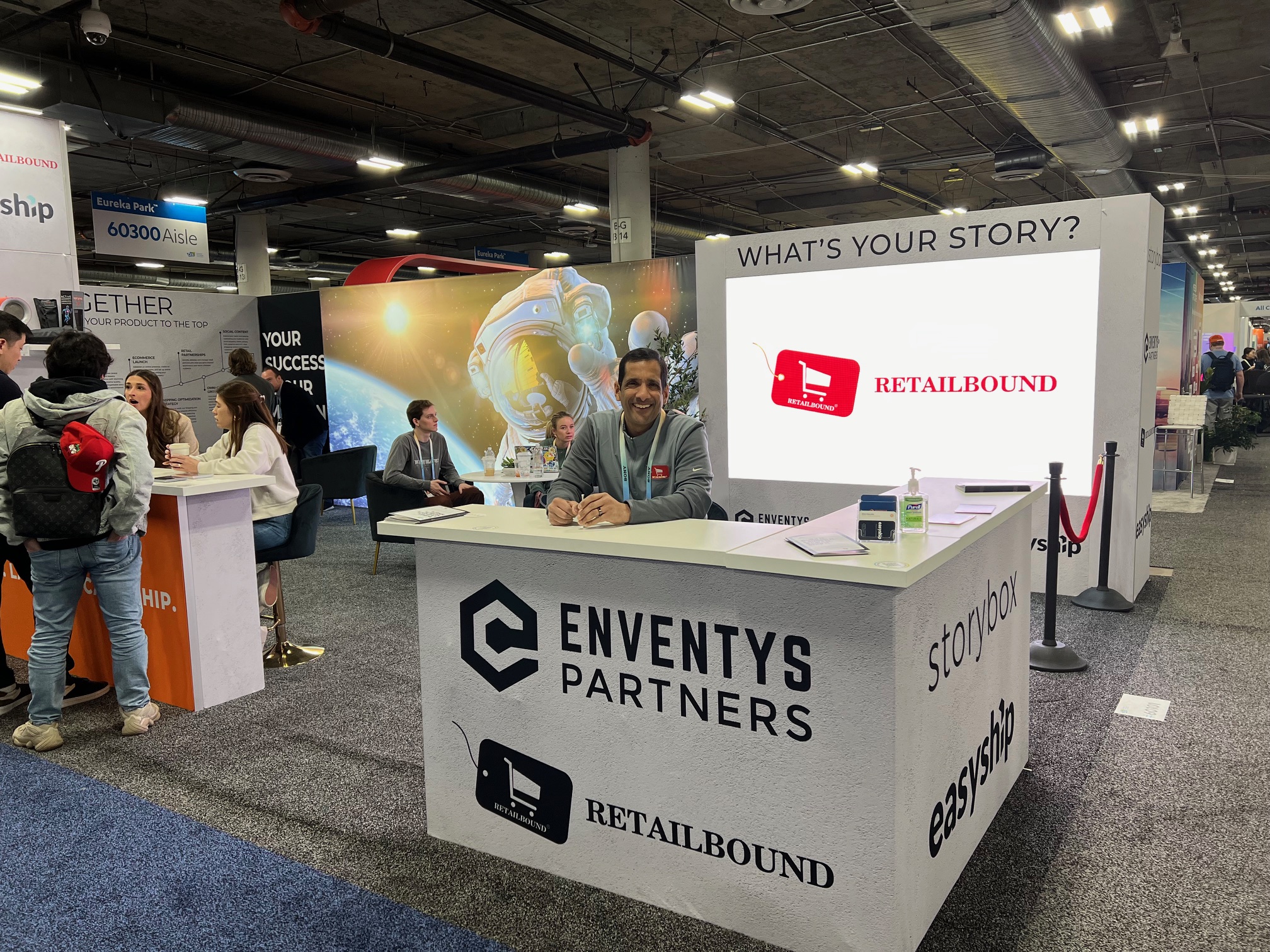
In retail, staying ahead of the curve is not just a strategy. It is a necessity. Meet Yohan Jacob, founder and president of Retailbound, a company that helps product makers rethink their retail strategy. With more than three decades in the industry, Yohan is a trusted name. He has helped many brands grow in a competitive market. Here are the key lessons from his interview on how to succeed in retail as a product brand: what buyers expect today, and the order to do the work in.
Key takeaways
- Retail moves faster than it used to, driven by technology and changing shopper behavior. A strategy written three years ago is not a strategy now.
- Yohan Jacob has more than three decades of experience in the retail channel. The useful parts are the specifics, not the generalities.
- Buyers judge readiness before they judge product. Packaging, costing, supply and support all get checked before anyone decides whether the thing is good.
- A strong retail strategy is a sequence, not a mindset. Get ready, cost it, choose the route, build the sheet, target the tier, pitch, then manage the account.
- Most failures in retail are not product failures. They are pricing, packaging, targeting and follow-up failures, and all of them are fixable before you submit.
- Retailbound works the retail channel across more than 150 retailers in the United States and Canada. That is where the specifics in this article come from.
Quick check
Is Your Product Ready for Retail?
Not sure if your product, pricing, packaging and sales strategy are ready for major retailers? Let’s talk about where you are today and what it will take to get retail-ready.
Understanding the Retail Market
Retail is changing at a breakneck pace. Technology moves fast, and shoppers’ tastes shift with it. For product makers, keeping up takes more than good products. It takes a strong retail strategy that adapts as trends change.
Retail strategy is no longer optional. It is a core part of success. Online shopping, omnichannel retail and data-driven decisions have changed the game. Manufacturers need a strategic approach that gets the most reach and impact. Yohan Jacob says a strong retail strategy makes your product visible and keeps customers engaged. That leads to more sales and brand loyalty.
To thrive, product makers need to focus on three things. Understand shopper behavior. Optimize the supply chain. Use digital marketing well. Match what modern shoppers want, and you set yourself up for long-term success.
Pro tip
Walk the aisle you want to be in before you write anything. Photograph the shelf. Note every price point on it. Count how many facings each brand holds. That one visit tells you the price tier you have to hit, and who would have to lose space for you to gain it. It is also the first question a buyer will ask you.
What a Retail Buyer Expects from a Brand Today
A changing market is an abstraction until you sit opposite the person deciding whether to stock you. From that side of the desk, it all turns into a short list of things a buyer checks. Often within the first few minutes.
Retail-ready packaging that works at shelf distance. A buyer pictures your product in a set, seen for a moment by a shopper walking past. Can you tell what it is from a distance? Does the pack survive handling and stacking? Does the barcode scan? Does it fit the shelf profile they have? A pack designed for a product photo, not a shelf, is obvious to a buyer at once.
Costing that survives wholesale margin. The buyer works out what they need to make on it. Then they check whether your price leaves room for that at a shelf price shoppers will pay. If your numbers only work at direct-to-consumer prices, the conversation ends there. Know your landed cost, your wholesale price and the resulting shelf price before you walk in.
Data you can produce on your own sell-through. Any proof that real customers buy the product again, from any channel. A buyer wants something that lowers their risk. Your own sales record, honestly presented, does that better than any projection.
The ability to support a test rather than a national rollout. Most placements start in a small set of stores. A brand that can only talk about a full rollout reads as a brand that has not done this before. So does one that cannot afford to service a small test properly. Be ready to say exactly how you would support a limited launch.
An answer to what your product replaces. Shelf space is finite. Putting you in means taking something out. The buyer needs a reason why the space works harder with you in it. Maybe you bring new customers, a higher price point, a gap in the range or a faster rate of sale. Have the answer ready. It is the question behind the meeting.
Responsiveness measured in hours, not days. Once you are a vendor, a buyer who waits days for an answer will choose someone else next time. Slow replies at the pitch stage are read as a preview of what you would be like to work with.
Insights from Yohan Jacob
Alibaba interviewed Yohan Jacob about retail strategy. What follows are the most useful points. If you want to know who else works on this, meet the Retailbound team.
Top 5 Key Yohan Jacob Insights from the Alibaba Podcast
“There’s really one secret to being successful in retail. And it’s pretty simple. But a lot of people have a hard time executing. It’s basically making the buyer look good, making retail buyer’s job easier.”
In other words: your job is not to impress the buyer. It is to make the buyer look good.
“If you’re the same product like the other 20 products on the shelf, why should I pick you?”
In other words: if the buyer already has 20 versions of your product, why would they replace one?
“It’s like a marriage after the honeymoon phase. What do you do to build that relationship with your wife or husband? Same thing. Once you get into a new relationship with a retailer, what do you do to keep that growing? You gotta find ways to grow the business.”
In other words: getting the PO is the start of the relationship, not the finish line.
“Generally speaking, you’ll get nine no’s and one yes.”
In other words: a “no” from one retailer does not mean “no” from retail.
“Every time the Best Buy warehouse has to open a box and count four units to be shipped out to that one store in Chicago, it actually costs the buyer money because someone’s actually had to count the inventory versus shipping a proper inner case pack. Make sure your packaging is retail ready.”
In other words: retail readiness goes far beyond the product box. Your case pack affects the retailer’s costs.
Implementing Retailbound’s Strategies
Putting Retailbound’s strategies to work takes a systematic approach. Yohan recommends that product makers start with a full review of their current retail strategy. Look at what works and what does not. Find the areas to improve.
Once the review is done, set your priorities. Maybe you want more market reach, more brand awareness or happier customers. Clear goals matter. With clear goals, you can build targeted strategies that fit your vision.
Next, build a strong brand identity. Yohan stresses the value of a brand story that connects with shoppers. A strong identity sets a product apart from its rivals and builds loyalty.
Finally, invest in digital marketing and your online presence. A strong online presence helps you reach a wider audience. Use social media, content marketing and e-commerce platforms to engage shoppers and drive sales.
Pro tip
Pick one retailer tier and build for it. Do not prepare a version for everyone. The packaging, case pack, margin and support model that work for independent stores are not the ones that work for a national chain. A brand that hedges across both arrives at each with the wrong answer.
The Order to do This in
Retail work has an order. Doing it out of sequence is the most common reason a promising brand stalls. Here is the sequence, with the guide on this site that covers each step in depth.
1. Get retail ready. Packaging, barcodes, case packs, compliance paperwork, product liability insurance, and a company that can invoice and ship. This is the step that gets skipped. It is also the step a buyer checks first, and the base of how new brands succeed in retail. What Retail Buyers Look For Before They Say Yes
2. Cost the product for wholesale. Work back from a realistic shelf price. Take off the retailer’s margin, any distributor’s margin, freight, duty and promotional allowances. Find out whether the business works at wholesale before you pitch anyone. Then plan for scaling for retail without overspending. How to Price Your Product for Retailers
3. Decide your launch route. Direct to retail, through a distributor, through a rep group, or building proof in another channel first. The answer depends on your category, your capital, and how much account management you can do yourself. How to Launch a New Product in Retail, 2026 to 2030
4. Build the sell sheet. One page: the product, the price, the margin, the pack details, and the reason the buyer should care. It is the document that survives the meeting and gets passed around when you are not in the room. How to Create a High-Converting Retail Product Sell Sheet
5. Target the right retailer tier. Independents, regional chains and national accounts want different things and demand different capabilities. Match your stage to the tier, and a pitch turns into a conversation. For a worked example of one retailer’s requirements, see how to get your product into Ace Hardware. How to Approach Retail Stores to Sell Your Product
6. Pitch the buyer. Find the right person. Time it to the category review calendar. Then run the meeting itself. 5 Things NOT to Do When Pitching to a Retail Buyer (and What to Do Instead)
7. Manage the account. Sell-through reporting, in-store marketing, replenishment, promotional planning, and the review meeting that decides whether you stay. This is where the work lives, and it never stops. Learn how to avoid damaging your retailer relationships along the way. How to Manage Retail Accounts Efficiently and Scale Your Brand Without Adding Headcount
If you are early, do steps one and two before anything else. Almost every brand that struggles in step six failed to finish step two.
Why a Strong Retail Strategy Matters
Retail is competitive, and a strong strategy is the key to growth. Yohan Jacob’s advice comes down to three things. Understand shopper behavior. Build strong retailer relationships. Use data to make better decisions.
For product makers, keeping your strategy in line with market trends keeps you relevant. Put Retailbound’s proven strategies to work, and you set yourself up for success and new opportunities.
Pro tip
Before you spend anything on a launch, work out what it costs you to support one store for a year. Then multiply by the number of stores in the order you are hoping for. Brands routinely win an order they cannot afford to service. The second order never comes, because the first one was handled badly.
Where Product Brands Most Often Go Wrong
Most brands that fail in retail do not fail because the product was bad. They fail on a handful of recurring decisions, made early, for reasons that felt sensible at the time. Here is the instinct next to what works.
| Common instinct | What works | |
| Pricing | Set the retail price, then discount from it. | Start at wholesale and check what is left. |
| Packaging | Designed to look good online. | Designed to be understood at shelf distance. |
| Retailer target | The biggest chain that will take a call. | The tier the product is ready for. |
| First order | As large as possible. | Small enough to service perfectly. |
| After the yes | Move on to the next retailer. | Support sell-through until the reorder lands. |
| Data | Units shipped. | Sell-through rate per store. |
Read down the left-hand column and you will notice something. Not one of those is a product problem. They are pricing, packaging, targeting, supply and follow-up problems. That is why a good product can fail in retail while a merely adequate one holds its shelf for years. The product gets you the meeting. Everything in the right-hand column is what keeps the listing.
Free consultation
Talk to a retail expert about your product.
We build the retailer list, the pricing model, and the buyer pitch, so your first meeting starts from your numbers instead of theirs.
Retainer only, no commission · 150+ retailers · No obligation
Frequently asked questions
Product, price, place, promotion and people. For a brand selling into retail, not running a store, the useful reading is this: a buyer judges all five at once. A weakness in one reads as a risk in the others.
Most published retail strategy is written for retailers deciding assortment, pricing and store experience. A product brand needs the opposite view. Which retailers fit, what readiness they demand, how to price for their margin, and how to support sell-through once stocked.
Usually given as right product, right place, right time, right quantity and right price. They are worth knowing because they are the buyer’s checklist. A submission that fails on quantity or timing gets declined, however good the product is.
It varies by category and by how you frame the question, so a single answer would mislead. The more useful question for a brand is which retail channel is most profitable for your product. That depends on your margin after wholesale, your case pack, and how much support each store demands.
Google shows this next to retail queries, but it belongs to sales prospecting, not retail placement. It is a good example of how thin this search result is. If you are selling into retail, the sequence that matters is readiness, costing, targeting, pitch and account support.