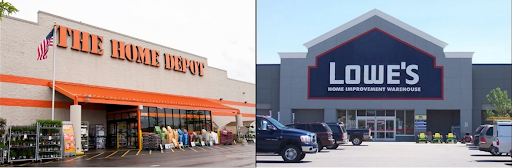
Getting your product into Home Depot or Lowe’s can be a significant growth opportunity for product manufacturers and brands in the hardware, home improvement, building products, lawn and garden, outdoor, and related categories. Selling through these major home improvement retailers can give your brand access to a large customer base, increased retail visibility, and the potential for significant sales volume and long-term retail growth.
However, getting your product approved by Home Depot or Lowe’s is highly competitive. Having a great product is only the starting point. Retail buyers want to see that your brand is retail-ready, your pricing and margins are competitive, your packaging clearly communicates the product’s value, and your company has the inventory, fulfillment, marketing, and operational capabilities to support a major retail program. You also need a compelling buyer presentation and a clear reason why your product deserves a place in the retailer’s assortment.
In this 2026 vendor guide, we’ll walk you through the key steps for getting your product into Home Depot or Lowe’s — from determining whether your product is a good fit and preparing your brand for retail to identifying the right buyer, developing your pitch, navigating the vendor process, and positioning your product for long-term success.
Key Takeaways
- Vendor means three different things at both retailers. Product supplier, service provider and delivery contractor each apply through a different portal, and starting in the wrong one costs weeks.
- Home Depot states that its supplier review process can take up to 60 days, which is a rare published timeline in this category and worth planning around.
- Each retailer runs several official destinations. Home Depot has the Supplier Hub, a prospective suppliers help center and a separate Canada route. Lowe’s has the supplier program page and the Vendor Gateway prospect application.
- The professional customer and the do-it-yourself shopper want different things from the same category. Your pitch has to say which one you are for.
- Lawn, garden and outdoor categories reset on a calendar. Timing a submission to the reset matters more than being ready three weeks after it closed.
- Distribution is not one choice. Direct, through a distributor, through a manufacturer representative, or starting online are all live routes and they can run at the same time.
Want Help Getting Your Product into Home Depot or Lowe’s?
Talk with a retail expert about your product and retail strategy.
Supplier, Service Provider or Delivery Contractor, Which One Are You?
Both Home Depot and Lowe’s use the word vendor for three completely different relationships, which is why searching for how to become one returns three completely different sets of instructions. Work out which one you are before you fill anything out, because the portals do not connect and time spent in the wrong one is wasted.
Product supplier. You manufacture or own a product, and you want the retailer to buy it from you, stock it and resell it to their customers. This is a merchandising relationship. It runs through Home Depot’s supplier hub and new product submission process, or through the Lowe’s Vendor Gateway, and the decision maker is a merchant or category buyer.
Service provider. You perform work that the retailer sells to its customers, such as installation, measurement, delivery and install, or repair. A customer buys a countertop installation from the store, and you are the company that shows up and installs it. This is a services relationship, it runs through a completely separate provider portal at both retailers, and it is governed by licensing, insurance and coverage area rather than by product assortment.
Delivery or logistics contractor. You move goods, either between the retailer’s facilities or to customers’ homes. This is a third route again, usually handled through a logistics or last-mile program rather than either of the above.
This guide is about product supply. Everything below assumes you make something you want on a shelf or on the retailer’s website. If you are an installer, a contractor or a delivery partner, the supplier hub and the Vendor Gateway will not help you, and you want each retailer’s service provider program instead. Going to the right portal first is worth weeks.
1. Research the Market and Your Competition
Before pitching your product, take the time to research the market and the retailer’s existing product assortment. Browse Home Depot’s and Lowe’s websites and store aisles to see what’s already being sold.
Ask yourself:
- Does your product fill a gap in their current selection?
- What brands are your main competitors?
- How does your product offer a unique benefit or solve a problem better than others?
Understanding the market landscape and retailer needs will help you tailor your pitch and position your product as a valuable addition to their lineup.
Pro Tip: Walk both stores in the same week and photograph the same aisle in each. Home Depot and Lowe’s merchandise the same categories differently, and the brand that holds the end cap in one often does not in the other. That single comparison tells you which retailer has the gap you fit and which one you should pitch first.
2. Understand Home Depot and Lowe’s Buyer Requirements
Each retailer has specific product submission requirements and compliance standards — including packaging, pricing, quality, safety certifications, and logistics.
Home Depot and Lowe’s buyers are data-driven and expect proof of product-market fit. Before reaching out:
- Ensure your product meets their packaging and labeling standards.
- Confirm your pricing structure leaves enough margin for the retailer.
- Prepare your sales data, customer reviews, and marketing materials to demonstrate demand.
Meeting these requirements upfront saves time and shows buyers that you’re prepared to operate at their level.
Home Depot and Lowe’s Compared for a New Supplier
Most guides treat these two retailers as one destination. For a reader deciding where to spend their first application, the differences are worth knowing.
| Home Depot | Lowe’s | |
| Where a new supplier starts | Supplier Hub, prospective suppliers route | Vendor Gateway prospect application |
| Ongoing supplier system | The Home Depot Supplier Hub | Vendor Gateway login |
| Separate services route | Become a provider, for installation work | Lowe’s Service Provider site |
| Supplier diversity registration | homedepot.suppliergateway.com | lowes.suppliergateway.com |
| Separate Canada route | Yes, a distinct prospective Canada page | Handled through the same program pages |
| Published review timeline | Up to 60 days, per The Home Depot | Not published |
Where the application starts. Home Depot routes prospective suppliers through its supplier information pages and a new product submission process, and approved companies then move into the Supplier Hub for onboarding. Lowe’s routes prospective suppliers through the Lowe’s Vendor Gateway, which serves as both the prospect application and the ongoing platform for item and supply chain information.
What the portal is called. Home Depot: the Supplier Hub, reached after approval, with the new product submission portal as the entry point. Lowe’s: the Vendor Gateway, with a prospect application and a separate login for existing suppliers.
Published review timeline. Home Depot states that the review process can take up to 60 days. Lowe’s does not publish an equivalent figure, which means you plan against the process rather than against a date.
Supplier diversity. Both retailers run supplier diversity programs with their own registration routes. If your business qualifies, registering there as well as through the standard route is worth doing, though it is an additional path in rather than a substitute for meeting the assortment need.
Canada. Home Depot maintains a separate supplier route for Canada. If you want both countries, treat them as two applications rather than one.
Customer mix. Both serve professional trade customers and do-it-yourself shoppers, and both have been investing in the professional customer. Which side your product serves is a question you will be asked, and answering “both” without evidence is a weak answer at either retailer.
What is genuinely the same. The information you need to prepare is nearly identical: legal and tax details, product specifications, packaging, costs and retail pricing, logistics and fulfillment capability, and proof that the product sells. Registering does not oblige either retailer to buy anything. At both, the submission is the beginning of an assessment against their assortment needs, not an application that gets approved or denied on its own merits.
If you are choosing where to start, choose on category fit and on which retailer’s shopper matches your product, not on which portal looks easier.
The Home Depot Supplier Hub
How to become a Home Depot Supplier
If you believe your product is a good fit for The Home Depot, the first step is to review the retailer’s prospective supplier information and submit your product through its New Product Submission portal. Before applying, make sure you have your company and product information ready, including your Tax ID, DUNS number, legal business information, product descriptions, pricing, unit costs, logistics capabilities, and other relevant product details.
Once your submission is complete, the Home Depot Merchant Team will review your application. According to The Home Depot, this review process can take up to 60 days. If your company and product are approved to move forward, you will receive a registration key that allows you to begin the supplier onboarding process through The Home Depot’s supplier portal.
Before submitting, we recommend making sure your product is truly retail-ready. A strong product submission should clearly communicate your product’s value proposition, retail price and margins, sales history, competitive advantages, packaging, and ability to support The Home Depot’s inventory and fulfillment requirements.
| Stage | What is happening | What you should be doing |
| Submission | Your details enter the supplier hub record | Keep a copy of exactly what you submitted |
| Business and compliance checks | Entity, insurance and product details validated | Fix any documentation gap immediately |
| Merchant routing | The submission is matched to a category merchant | Confirm you chose the right category |
| Review | Home Depot states this can take up to 60 days | Build demand evidence, do not resubmit |
| Sample or costing request | Genuine interest, the first real signal | Respond the same week, pallet costs ready |
| Silence past the review window | Common, and not always a final no | Come back at the next category reset |
What Happens After You Apply and How Long the Review Takes
According to The Home Depot, the review process can take up to 60 days. That is the retailer’s own published figure and it is worth planning around, because almost nothing else about the timeline is public.
What the wait is filled with looks roughly like this:
Stage 1. Submission. You complete the new product submission with your company details, Tax ID, DUNS number, product descriptions, costs, pricing and logistics capability. Incomplete submissions do not queue, they stall, so check everything before you send it.
Stage 2. Business and compliance screening. Your company is checked as a trading entity: legal status, insurance, certifications, and whether you can meet supplier requirements at all. This stage is about the company, not the product.
Stage 3. Merchant routing. The submission reaches the merchant responsible for the category your product would sit in. This is the step most brands do not realize exists, and it is why category fit matters more than product quality. A good product routed to a category with no gap goes no further.
Stage 4. Merchant review. The merchant assesses your product against the assortment they already carry, the gap they are trying to fill and the performance of the products it would displace.
Stage 5. Follow-up requests, where it goes well. Samples, revised costing, packaging detail, capacity questions or a request to meet. A request for more information is the outcome you want.
Stage 6. Registration key and onboarding. If your company and product are approved to move forward, you receive a registration key that starts supplier onboarding through the supplier portal. Onboarding is a separate body of work with its own requirements.
Stages 3 and 4 are where it goes quiet, and the quiet is the hardest part for a brand that has just spent months preparing. Do not resubmit and do not chase weekly. Both make you memorable for the wrong reason. Spend that time building the evidence that improves the answer: sell-through data from wherever the product already sells, reviews, retail media coverage, packaging improvements and capacity confirmation. If the answer comes back as a no, all of that work is what you take to the next conversation.
For Lowe’s, the Vendor Gateway prospect application is the equivalent entry point and the stages run the same way, from submission through screening to the merchant responsible for the category. Lowe’s does not publish a review timeline, so do not assume the Home Depot figure transfers. Plan for a process without a date attached and keep selling elsewhere while you wait.
Lowe’s Vendor Gateway
How to Become a Lowe’s Supplier
If you want to sell your product through Lowe’s, the Lowe’s Vendor Gateway (LVG) is the starting point for the supplier onboarding process. The Vendor Gateway serves as a centralized platform for prospective and existing suppliers, providing a single entry point for important vendor and supply-chain integration activities. It also serves as a central hub for managing item information as you move through the Lowe’s vendor process.
Before approaching Lowe’s, make sure your company and product information is organized and ready for submission. This includes your legal and business information, product specifications, pricing and costs, logistics and fulfillment capabilities, and other information Lowe’s may require during the onboarding process. Keep in mind that registering through the Vendor Gateway does not guarantee that Lowe’s will approve or purchase your product—the product still needs to meet the retailer’s assortment needs and buyer requirements.
For emerging brands, the goal should be to approach Lowe’s with more than simply a product submission. Having a compelling retail presentation, competitive pricing and margins, proven sales, retail-ready packaging, reliable inventory, and a clear explanation of why your product belongs in the Lowe’s assortment can help you make a stronger case to the appropriate merchant or buyer.
There are two different systems with similar names. The Vendor Gateway prospect application is where a brand with no existing relationship starts. The Vendor Gateway login is for suppliers who already trade with Lowe’s. A login screen is a sign you are in the wrong place, not a sign you were rejected. Home Depot has the same split between its prospective suppliers route and the Supplier Hub itself.
3. Craft a Compelling Product Pitch
When you finally connect with a buyer, you’ll have a limited window to grab their attention—so your product pitch must be clear, concise, and persuasive.
Focus on:
- The unique value proposition (what makes your product different).
- How your product drives incremental sales or attracts new customers.
- Evidence of strong consumer demand — such as online reviews, media coverage, or social proof.
Back your claims with data and visuals — including sell-through rates, testimonials, or demo videos. A polished, professional pitch deck can make a strong impression.
Why Home Improvement Buyers Turn Down Products That Fit
Home improvement buyers turn down good products constantly, and the reason is rarely that the product is bad. These are the category-specific ones that trip brands up.
You built for the do-it-yourself shopper and the buyer is chasing the professional, or the reverse. Both retailers serve two very different customers who walk the same aisles. A tool that is perfect for a homeowner doing one job a year may be wrong for a contractor who needs it to survive daily use, and a professional-grade product at a professional price can sit untouched on a shelf full of weekend buyers. Know which customer you are for, say it clearly, and show the evidence.
Packaging that cannot survive the store. These are warehouse-format stores. Product is delivered on pallets, dropped, stacked on high racking, handled by customers with carts, and in the garden and outdoor areas it sits in sun, rain and cold. A package designed for a clean shelf in a small-format store fails all of that. Buyers can see it in a sample within seconds.
No answer on seasonal resets. Lawn, garden, outdoor and seasonal categories rebuild on a calendar. If you miss the reset window for your category, you are not late by a few weeks, you are waiting for the next cycle. Brands that cannot state when their production and delivery will be ready relative to that window get passed over for one that can.
Supply that cannot cover the store count. The buyer is deciding between a regional test and a wider rollout, and both need to know your ceiling. If you cannot state your production capacity, your lead time and what happens if the product sells faster than forecast, the safe decision is to pass. Out of stock on a new item is worse for the buyer than never listing it.
An assembly or installation requirement with no service answer. If your product needs installing, assembling or explaining, you have handed the store a labor problem. Either supply the answer, whether that is a service partner, an installation guide, a video or a display that demonstrates it, or expect the buyer to choose a product that needs none of it.
No plan for returns on a bulky item. Big, heavy products are expensive to send back, expensive to restock and often unsellable once returned. Buyers ask about return rates and reverse freight because it comes out of their category’s numbers. Arriving with a considered answer, including who pays and what happens to returned units, separates you from most of the brands they see.
Pro Tip: Say in the first thirty seconds whether your product is for the professional customer or the do-it-yourself shopper, and give the buyer a reason to believe you. These merchants run two businesses in one building and a pitch that tries to serve both usually convinces neither.
4. Build and Nurture Buyer Relationships
Securing shelf space at Home Depot or Lowe’s often comes down to relationships and timing.
Buyers are constantly approached by hundreds of brands, so standing out means building trust over time. Attend industry trade shows, hardware expos, and networking events where retail buyers are present. Introduce yourself, listen to their needs, and follow up respectfully after the event.
You can also reach out through email or LinkedIn, but always be professional, concise, and patient. Building credibility takes time, but these relationships are crucial for long-term retail success.
Pro Tip: Track the merchant, not the title. Category merchants in home improvement move between categories regularly, so the relationship you built last year may now sit two aisles away. Keep a simple record of who moved where, because a warm contact in an adjacent category is worth more than a cold approach to yours.
5. Explore Multiple Distribution Channels
While your ultimate goal may be getting your product on the shelves, consider starting with online listings on HomeDepot.com or Lowes.com. Selling online first allows you to prove sales performance and gather consumer data that strengthens your future pitch for in-store placement.
You can also partner with distributors or sales reps who already have existing relationships with these retailers. This can help you navigate the process more efficiently and avoid common pitfalls.
Pro Tip: Cost your product at the pallet, not the unit. Home improvement retailers move bulky goods in pallet and truckload quantities, so your freight cost per unit, your pallet configuration and how many units fit a pallet all change your landed cost. Brands that quote from unit economics find the freight gap after the purchase order.
6. Stay Persistent and Keep Refining Your Strategy
Getting your product into Home Depot or Lowe’s doesn’t happen overnight. You may face rejections or delays along the way — but persistence and preparation are key.
Continue refining your pitch, strengthening your data, and seeking feedback from buyers or industry mentors. Every interaction is a chance to improve your positioning.
Remember: many successful brands faced multiple rejections before finally landing their first big-box retail deal.
Persistence in this category means coming back at the right point in the calendar, not coming back more often. Lawn, garden, outdoor and seasonal categories are rebuilt on a schedule, and a resubmission three weeks after a reset closes sits in a queue until the next one.
Conclusion
Securing a spot on the shelves of Home Depot or Lowe’s can dramatically increase your brand’s visibility, credibility, and revenue potential. However, success requires thorough research, compliance readiness, strong relationships, and persistence.
If you’re serious about expanding into big-box retail but aren’t sure where to start, Retailbound can help.
Since 2008, our team of former retail buyers and channel experts has helped countless product brands launch, scale, and manage retail programs across more than 150+ major retailers in the U.S. and Canada.
If you’re ready to bring your product into major retailers but need help navigating the process, Retailbound can guide you every step of the way. Schedule a free consultation with one of our retail experts and discover how to get your product retail-ready, connect with the right buyers, and drive long-term retail growth.
Frequently Asked Questions
How do I get my products into Home Depot?
Apply as a product supplier through The Home Depot Supplier Hub, not through the provider or contractor routes, with retail-ready packaging, pallet-level costing and a pitch aimed at a specific category. Home Depot states the review process can take up to 60 days.
How do I pitch a product to Home Depot?
Lead with the category rather than the product. Show what the subcategory currently offers, what your item adds, whether it serves the professional customer or the do-it-yourself shopper, your retail price and margin at pallet volumes, and evidence it already sells somewhere else.
Does Home Depot have third party vendors?
Yes, and they fall into separate groups. Product suppliers whose goods Home Depot buys and resells, service providers who carry out installation and repair work sold through the store, and logistics and delivery contractors. Each applies through a different route, so identify which one you are before you start.
How to sell a product to Lowes?
Start with the Lowe’s Vendor Gateway prospect application, which is the entry point for brands with no existing relationship. Come with category fit, pallet-level costing, retail-ready packaging and evidence of demand. The Vendor Gateway login is a different system, for suppliers who already trade with Lowe’s.
How to become a vendor for Lowes?
Decide first whether you are a product supplier or a service provider, because Lowe’s runs separate programs for each. Product suppliers go through the supplier program and the Vendor Gateway prospect form. Installers and trades go through the Lowe’s Service Provider route, which has its own requirements.
About the Author
Yohan Jacob is the President and Founder of Retailbound, a full-service retail channel management agency that helps product brands launch and grow in major retailers across North America. With over 25 years of retail experience, Yohan and his team specialize in retail strategy, buyer engagement, channel marketing, and sales management to help brands increase their retail presence both in-store and online.