Advice
3PL Pricing Explained: Why Costs Vary and How to Estimate Your Fulfillment Fees
Why no two 3PL quotes look alike, what drives the rate in each pricing model, and how to work out your own cost per order before you ask for one.
 Yohan Jacob
19 min read
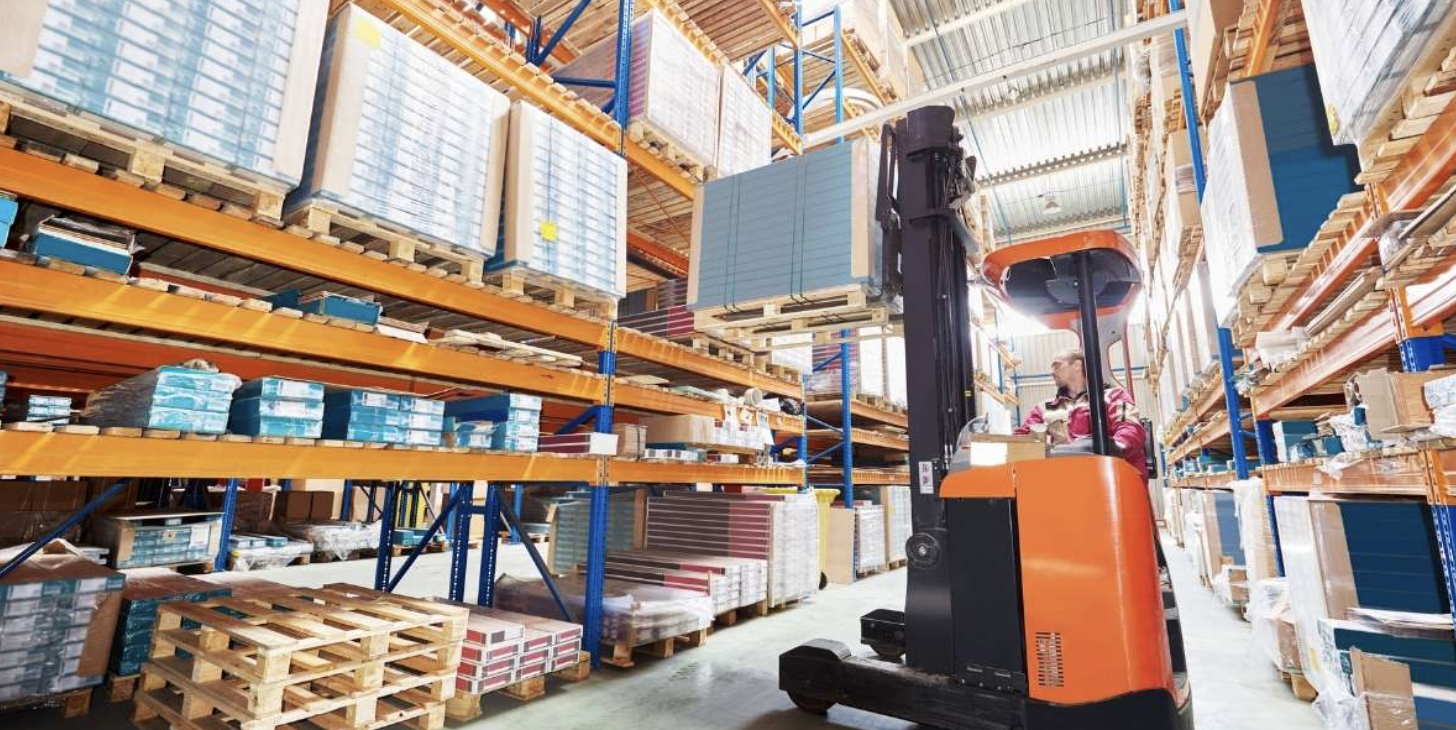
3PL pricing is unique. There is no standard rate card. An ecommerce brand can’t just ask a 3PL provider for one. Each proposal depends on many factors. To make it harder, there are several 3PL pricing models to choose from. Fulfillment is one step in how products get on store shelves, and it is often the step brands price last. Here are the models, what drives the rate in each one, and a way to estimate your own costs.
Key takeaways
- There is no standard rate card in 3PL. Every proposal is built from your own volumes, box profile and storage needs, so two quotes rarely compare directly.
- Your product’s physical profile drives the price. Pricing a 10x10x10 five-pound box is nothing like pricing a five-ounce polybag.
- The pricing model decides who carries the risk. Transactional rates shift risk to the 3PL and cost more; committed volume or space lowers the rate and moves the risk back to you.
- Cost-plus pricing shows you every expense and rewards improvements right away, but it is hard to run in a facility with a shared labor pool.
- Percentage-of-sales pricing is rare because revenue stops tracking the work. That is what strained 3PLs when volume shifted to direct-to-consumer in 2020.
- Shipping is the biggest line. A 3PL’s carrier discounts are often where the real saving sits, not the handling rate.
3PL Pricing: What Are the Models?
Order fulfillment is the backbone of eCommerce. It’s far more than picking, packing and shipping. It’s a complex process that can make or break a business. As companies grow, many turn to third-party logistics providers (3PLs). They want efficiency, and they want to control fulfillment costs. Outsourcing can free up resources, save money and let you focus on what matters most: growth.
At a2b, our pricing is built to fit each client. Why? Because no two products or businesses are the same. Pricing a 10x10x10, 5-pound box is vastly different from pricing a 5-ounce polybag. And size and weight are not the only factors. There is much more to consider. Since pricing varies across 3PLs, comparing costs can feel like comparing apples to oranges.
So, where do you start? The first step is to understand your current fulfillment costs.
How to Calculate Your Fulfillment Costs
Before you start an RFP or consider outsourcing, you need a clear picture of what fulfillment costs you today. That applies whether you handle it in-house or already work with a 3PL. To get this number, add up the following expenses.
Pro tip
Work out your current cost per order before you ask anyone for a quote. Include the hours you or your staff spend picking and packing, valued at what you would pay someone else to do it. Brands that skip this step have no baseline. Every proposal looks reasonable, and none of them can be judged.
- Warehouse Receiving: Costs tied to accepting and processing incoming inventory.
- Inventory Costs (Storage): Fees for keeping your products in a warehouse.
- Picking and Packing: Labor and resources needed to prepare orders.
- Packaging: Standard or custom materials used to ship your goods.
- Kitting/Value-Added Services: Extra steps like bundling or assembly.
- Return Management/Reverse Logistics: Handling returns efficiently.
- Shipping Costs: The price of getting orders to your customers.
If you manage fulfillment in-house, add these costs too:
- Labor: Wages for your warehouse team.
- Lease and Utilities: Rent for your facility, plus electric, gas, water and maintenance.
- Software and IT Systems: Tools to manage operations.
- Warehouse Racking: Shelving and storage infrastructure.
- Automation and Robotics: Investments in new tech.
Once you’ve crunched these numbers, you’ll have a solid grasp of your fulfillment expenses. Then you face a choice: optimize your current setup, or outsource to a 3PL.
The fee lines to collect before you can estimate anything
Every published 3PL pricing guide hands you benchmark rates. Benchmarks are a poor substitute for a method. Your cost comes from your own order profile and nobody else’s. What helps is a full list of the lines a quote can contain. Then you can check any proposal against it and see what was left out. You also need a way to turn your own numbers into a cost per order.
| When it is charged | Lines to look for |
|---|---|
| One-time | Onboarding and account setup. Systems integration. SKU and barcode setup. Initial inventory receipt. Any hardware or label stock. |
| Per order | Order processing. First pick. Packing labor. Packaging materials. Insert handling. Shipping label generation. |
| Per unit | Extra picks beyond the first. Kitting and assembly. Relabeling. Polybagging. Serialization. |
| Per period | Storage by pallet, bin or square foot. Account management. Software or platform access. Minimum monthly charges. |
| Per receipt | Container or pallet unloading. Counting. Put-away. Quality inspection. |
| Exception charges | Returns processing. Rush and same-day orders. Special projects. Oversized or hazardous handling. Peak season surcharges. Inventory counts and audits. Disposal. |
| Pass-through | Carrier shipping. Fuel surcharges. Duty and customs. Pallet purchase. |
Now turn your own operation into a number.
1. Take your last full calendar month of orders. Not a good month and not a projection. A real one, with the returns, the odd bulk order and the quiet week in it. Pull the order count, the average units per order, the spread of order sizes and the destinations.
2. Describe your physical profile. Your typical box size and packed weight. How many SKUs you carry. How much space your inventory takes up, in whatever unit the provider bills in. How many inbound receipts you take in a month.
3. Price every line in the table against those inputs. Multiply the per-order lines by your order count. Multiply the per-unit lines by your unit count. Count the per-period lines for one month, and add the receipts. Include the minimum if there is one. In a slow month, the minimum is the price.
4. Divide by orders. That gives you a cost per order for that provider, on your volume. It is the only figure that compares like with like. Do it again with carrier shipping excluded, so you can see fulfillment cost apart from freight. Carry that number into pricing your product for retail, where it sits against your margin.
Pay close attention to the exception lines. They are small in a normal month. They are also where a cheap quote becomes an expensive one. Returns, rush orders, special projects and peak surcharges spike in the months you can least afford them. They are also the lines most often missing from a headline quote. Build them into your peak season and Q4 planning.
Benefits of in-house Fulfillment
In-house fulfillment gives you full command of the order process. You can customize packaging, fix problems fast and handle products that need extra care. That said, it may not scale as smoothly or as cheaply as an outside provider when order volumes swing up or down.
Key benefits of in-house fulfillment:
- Complete control: You manage every step, from inventory storage to shipping. That allows customization and close quality control.
- Personalized packaging: You can create unique packaging with brand-specific touches.
- Quality control: You watch product handling and packaging standards directly.
- Special product handling: You can manage products that need specific care or attention.
Benefits of a 3PL
Outsourcing order fulfillment to a 3PL is a smart move. Fulfillment isn’t simple. It means managing inventory, picking, packing and shipping orders fast, and negotiating carrier rates. That’s why outsourced fulfillment can change the picture. It offers custom fixes for these tricky areas.
With the right 3PL partner, outsourced fulfillment brings many benefits:
- Save Time and Money: Simplify operations and cut costs.
- Tap Into Technology: Benefit from automation, robotics and advanced reporting tools.
- Scale with Ease: A 3PL can flex with your growth and seasonal spikes.
- Focus on What Matters: Free up resources for product development and marketing.
If outsourcing sounds appealing, the next step is to understand how 3PLs structure their pricing.
Questions to ask a 3PL before you sign
Take these into the conversation before you sign anything. The answers tell you as much as the rate card does.
1. Which retailers do you already ship to, and do you hold their routing guides? A vague answer about being able to handle retail means they have not done it. You will be the training run.
2. What happens to my rates if volume comes in below forecast? If they cannot answer clearly, there is a minimum you have not been shown. Or there is a rate that will be revisited.
3. Is storage billed by pallet, bin or square foot, and when is it measured? An evasive answer here is how a predictable line becomes an unpredictable invoice.
4. Who pays a chargeback caused by a warehouse error? If the answer is that it never happens, it happens. And you will be paying for it.
5. What is the notice period, and what does exiting look like? Ask who pays to pick, pack and load out your inventory. Ask whether stock can be held against unpaid invoices. Reluctance to discuss exit is a signal about the whole relationship.
6. How are returns priced? A vague answer means returns are an exception charge. You will discover it in your first bad month.
7. What is the peak season surcharge structure, and when is it announced? If it is announced during peak, you cannot plan around it. You have no room to negotiate it either.
8. Which parts of this quote are fixed for the contract term, and which can change? If everything is subject to review, the quote is an opening position, not a price.
9. Who is my day to day contact, and are they in the building where my stock is? A shared inbox instead of a named person tells you what resolution will feel like at your scale.
10. Can I speak to two current clients of my size, in my category? Hesitation on this question answers several of the others.
3PL Models Explained
Not all 3PLs price their services the same way. Here are the main models you’ll meet:
Pro tip
Ask for the same quote priced two ways: once transactional, and once with a volume or space commitment. Then run both against your worst realistic month, not your forecast. The gap between them is the price of the flexibility you are buying. Seeing it as a number makes the commitment decision simple.
Variable Warehouse Pricing
In this model, almost all warehousing costs are variable. Storage is billed for what is physically in the facility. Services are billed only when they are performed. There are no minimums to meet. As the customer, you have full flexibility and make no commitments.
The downside is that the risk shifts to the 3PL, so the rates are usually higher. The 3PL also has no guaranteed revenue from you. So they will be tempted to sell their capacity, both space and throughput, to the next willing customer. That can limit your business.
Fixed Variable Warehouse Pricing
In this model, you have some fixed costs, but most costs are still variable. For example, you may commit to a set amount of space with the 3PL. That reserves the space so it is there when you need it. There may also be minimums. They protect the 3PL, let them staff for your forecast, and cover part of their overhead if volumes fall short.
This structure builds collaboration between your company and your 3PL. It makes your 3PL a true supply chain partner. It also gives you a consistent, predictable month-to-month cost.
Cost-Plus Warehouse Pricing
This model is often a cost-effective option. In a Cost-Plus structure, the provider usually applies the lowest margin percentage. You see every expense. That lets you spot room for improvement and talk openly about the 3PL’s fulfillment costs.
One key advantage is that continuous improvements show up in your bill right away. It also gives the 3PL room to respond to requests, market shifts and expansions. However, Cost-Plus can also bring surprise expenses when quick decisions or market swings arise. It needs tighter oversight and more time to review invoices, which may delay cost reductions. Despite these challenges, cost-plus builds a stronger, more collaborative partnership with your providers. In most cases, it is used in facilities dedicated to a single client, or when the scope of service is very large. It is hard to run in shared facilities where a 3PL serves many customers with the same labor pool.
Revenue Share
The Revenue Share model is simple, but it takes just as much effort and analysis as the others. Here, the 3PL charges you a percentage of your total sales. Businesses may like it because the cost of warehouse operations tracks sales. However, 3PLs are generally reluctant to use it. It does not let their revenue adjust when the work changes.
A clear example came in 2020, when retail volume shifted heavily to direct-to-consumer sales. Before that, revenue sharing worked well for bulk shipments. Full cases and pallets went to retail distribution centers.
When that same volume moved to single-unit shipments, the workload jumped. Each unit needed its own packing and shipping to the end consumer, yet the revenue barely rose. That imbalance put financial strain on 3PLs as their costs climbed. This model also demands a lot of forecasting and ongoing analysis to stay accurate and sustainable.
Note
The model you choose is a decision about risk, not just rate. A transactional rate leaves you free to move, but it costs more per order. It also gives the 3PL no reason to hold capacity for you when they can sell it to someone else. A commitment lowers the rate and reserves the space, and you pay the minimum whether you use it or not.
How to compare two 3PL quotes that are not comparable
Comparing two 3PL quotes feels like comparing apples to oranges because it usually is. Providers bundle differently. They price on different models. They quote against different assumptions about your volume. Here is how to get them onto the same basis.
1. Restate every quote as a cost per order on your volume, not theirs. Providers quote against the volume they assume, or the volume you said you hoped for. Take your real month, as described above, and run it through both quotes yourself. The rankings often change. A quote with a lower per-order fee and a higher receiving charge wins or loses depending on how often you receive inventory.
2. Convert minimums and committed space into a fixed monthly cost and add them in. A quote with attractive rates and a monthly minimum is two prices: the rate card and the floor. In any month where you fall below the minimum, the floor is what you pay. Your real cost per order rises sharply. Add the minimum in as a fixed cost and recalculate.
3. Separate carrier shipping from fulfillment. Providers pass through carrier costs at different discounts, and some mark them up. If you compare a blended number, you are comparing one provider’s carrier deal against another’s handling efficiency. That tells you nothing useful. Price fulfillment on its own. Then price shipping on its own. Then decide which matters more at your weight and destination profile.
4. Identify which model each quote uses and who carries the risk. A fully variable quote shifts risk to the provider and prices accordingly. A fixed-variable quote with committed space and minimums shares the risk, usually at a better rate. Cost-plus gives you visibility and asks you to audit invoices. Knowing which one you are looking at tells you what happens to your cost when volume moves. That is the thing a rate card hides.
5. Run three scenarios through both quotes. A normal month, your peak month, and a month at half your forecast. Almost nobody takes this step, and it is the one that matters. The quote that wins at forecast volume often loses badly at half of it. Minimums, committed space and fixed account fees do not shrink when your orders do. A slow season is the most likely thing to go wrong in the next year. So knowing which provider is cheaper in that month is worth more than knowing which is cheaper in a good one.
Standard Fulfillment Costs
No matter the pricing model, certain costs are universal:
Pro tip
If a retail purchase order is anywhere in your plans, ask the 3PL to name the retailers they currently ship to. Ask whether they hold those routing guides. A warehouse that has never shipped to your target retailer will learn its compliance rules through chargebacks. Those land on your account, not theirs.
- Onboarding: A one-time fee to set up your account, integrate systems and formalize the processes you will use. For larger scopes, this also covers hiring and training new staff.
- Inventory Receiving: Labor to unload, identify and put away your goods, often charged per unit or pallet.
- Storage: Monthly fees for housing your inventory, usually billed by the pallet, square foot or cubic foot.
- Pick and Pack: Costs tied to filling each order.
- Kitting: Fees for assembling or prepping products, common for assortments that need a certain presentation.
- Packaging and Supplies: Boxes, dunnage, pallets and so on.
- Shipping: The big one. 3PLs use their volume discounts with carriers to save you money.
What changes when you ship to retailers, not just consumers
Everything above describes direct-to-consumer fulfillment: single orders, individual parcels, a consumer address. The moment you accept a retailer purchase order, a different set of cost lines appears. None of them exists in a DTC quote. If the difference between retailer and distributor roles is new to you, read that first.
| Direct to consumer | Shipping to a retailer | |
|---|---|---|
| Unit of shipment | One parcel to one person. | Cases and pallets to a distribution center. |
| Order document | An order from your store platform. | An EDI purchase order, with rules attached. |
| Labeling | A carrier label. | Carrier label, plus case and pallet labels to the retailer’s spec. |
| Carrier choice | Yours. | The retailer’s, per their routing guide. |
| Delivery | Whenever it arrives. | Inside a booked appointment window. |
| Paperwork | A packing slip. | Advance ship notice, bill of lading and packing list, all matching. |
| Penalty for getting it wrong | A customer complaint. | A chargeback against your remittance. |
The retail-only cost lines to expect:
EDI setup and per-document transmission. Setting up a trading partner connection has a cost. Most providers then charge per document sent. Purchase orders, advance ship notices, invoices and acknowledgments all count.
Advance ship notice accuracy. The ASN has to go out in a set window. It has to match what is on the truck, carton by carton. Building it correctly is real labor. A wrong or late one is one of the most common deductions a new vendor takes.
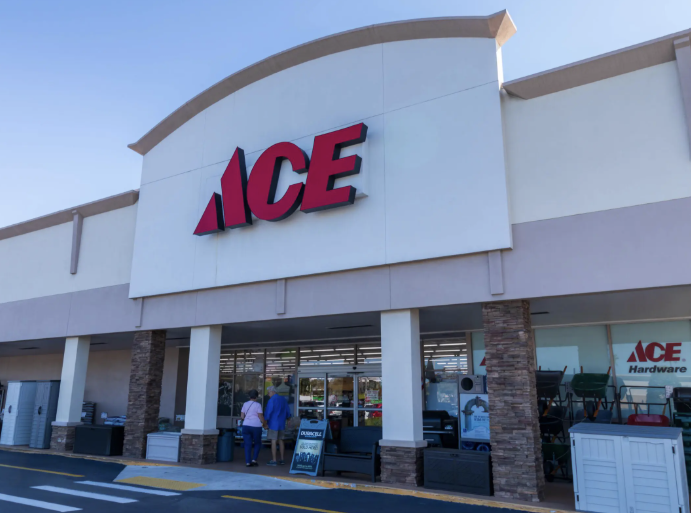
Routing guide compliance. The retailer sets the carrier, the service level and how the shipment is built. Your provider has to work to that guide rather than their own default. That is slower, and sometimes more expensive, than the way they would otherwise ship. Each retailer has its own. For one example of a retailer’s vendor requirements, see how to get your product into Ace Hardware.
Case pack and pallet configuration. Building pallets to a retailer’s spec means the right tie and height, the right wrap and the right mixed-SKU rules. It is a different operation from picking parcels, and it is usually charged as one.
Retail-specific labeling. GS1 and UCC-128 case labels, pallet labels and any retailer-specific ticketing all need label stock, print stations and a process for checking placement.
Delivery appointment scheduling. Somebody has to book the appointment through the retailer’s portal, watch for changes and rebook when freight slips. That is an admin service, and it is billed as one.
Chargebacks. The line brands never budget for. When any of the above is wrong, the retailer deducts from your remittance. It is charged to you, not absorbed by the warehouse, unless your contract says otherwise. Get that in writing before you sign. What a given deduction costs depends on the retailer’s own vendor compliance schedule, which is published in their vendor documentation.
The practical warning is this: a 3PL with no retail experience will learn your routing guide on your invoices. Ask which retailers they already ship to and whether they hold those routing guides. Find out before you learn the expensive way. The same logic applies to choosing the right retailer for your product: match the account to what your warehouse can actually do.
Factors Affecting Pricing
Third-party logistics pricing depends on the services provided, the complexity of the supply chain and market conditions. Here are the key elements that usually affect 3PL pricing:
- Volume and Frequency of Shipments: How much you move and how often matters. Higher volumes or regular shipments can bring economies of scale and lower your cost per unit. Sporadic or low-volume shipments can raise rates, because they are less predictable.
- Type of Goods: The nature of the products matters. Perishable items, hazardous materials and oversized goods often need special handling, equipment or compliance steps. Those drive up costs.
- Storage and Warehousing Needs: If you use a 3PL for warehousing, the price depends on space, storage duration and extra services such as climate control, inventory management or pick-and-pack. Peak seasons can also push rates up.
- Service Level: Value-added services like kitting, assembly or custom packaging add cost. The more tailored, hands-on or urgent the service (same-day delivery, for example), the higher the price.
- Geographic Scope: Local, regional and international logistics carry different price tags. Cross-border shipping brings customs, duties and longer transit times. One way to control this cost is to look for a 3PL with multiple locations.
- Market Conditions: Fuel prices, labor shortages and capacity limits can push rates up. A port backlog or a spike in demand also plays a part.
- Technology and Integration: Software for tracking, analytics or integration with your systems can raise the price. Better tech often means higher fees, but it may save money over time.
- Contract Terms: A one-off service and a long-term partnership are priced differently. Longer commitments may earn better rates. Spot pricing moves with the market.
- Labor Costs: Handling, packing and managing inventory takes people. In areas with higher wages, or when labor is scarce, prices move up.
Each 3PL weighs these factors differently. It often comes down to their operational focus and your specific needs.
This guest post was provided by a2b Fulfillment, a leading provider of end-to-end order fulfillment and 3PL services for both ecommerce and retail channels. The company delivers reliable, fast service to improve the customer experience. Core capabilities include scalable warehousing, precise pick, pack and ship operations, and efficient returns management. The team also offers value-added services such as kitting and assembly. Through advanced technology integration, clients get real-time visibility and control over their whole logistics process. Visit the a2b Fulfillment website to learn more.
Free consultation
Talk to a retail expert about your product.
We build the retailer list, the pricing model, and the buyer pitch, so your first meeting starts from your numbers instead of theirs.
Retainer only, no commission · 150+ retailers · No obligation
Frequently asked questions
There is no typical fee, which is why quotes vary so widely. Your rate is built from order volume and frequency, units per order, box size and weight, storage footprint and duration, where you ship, and how much technology and value-added work is included. Price your own profile against a full fee-line list, not against anyone’s published average.
An average is close to useless here. A five-ounce polybag and a five-pound box in a 10x10x10 carton are priced nothing alike. Shipping, usually the largest single line, depends on destination and carrier discount. The useful number is your own cost per order, worked out from your last full month of orders against every line in a quote.
On the spread between what it costs them to receive, store, pick, pack and ship your orders and what they charge you. They also earn margin on carrier rates they buy at volume discounts and resell. That is why the pricing model matters. A transactional rate has to cover the risk of your volume disappearing. A committed model prices lower because that risk sits with you.
Amazon’s fulfillment services operate as a 3PL. They handle storage, picking, packing and shipping for you. A 4PL sits a level above that. It manages several logistics providers and the wider supply chain rather than running a warehouse itself.
Four come up again and again. Transactional pricing with no commitment. A committed model where you reserve space or volume for a lower rate and accept minimums. Cost-plus pricing with full visibility of the provider’s costs. And percentage-of-sales pricing, which is rare because provider revenue stops tracking the work.