Advice
The New Product Cycle: How New Products Make It to Store Shelves
Follow a new product from idea to shelf to first reorder, and see who decides at each stage and what stalls most brands.
 Yohan Jacob
14 min read
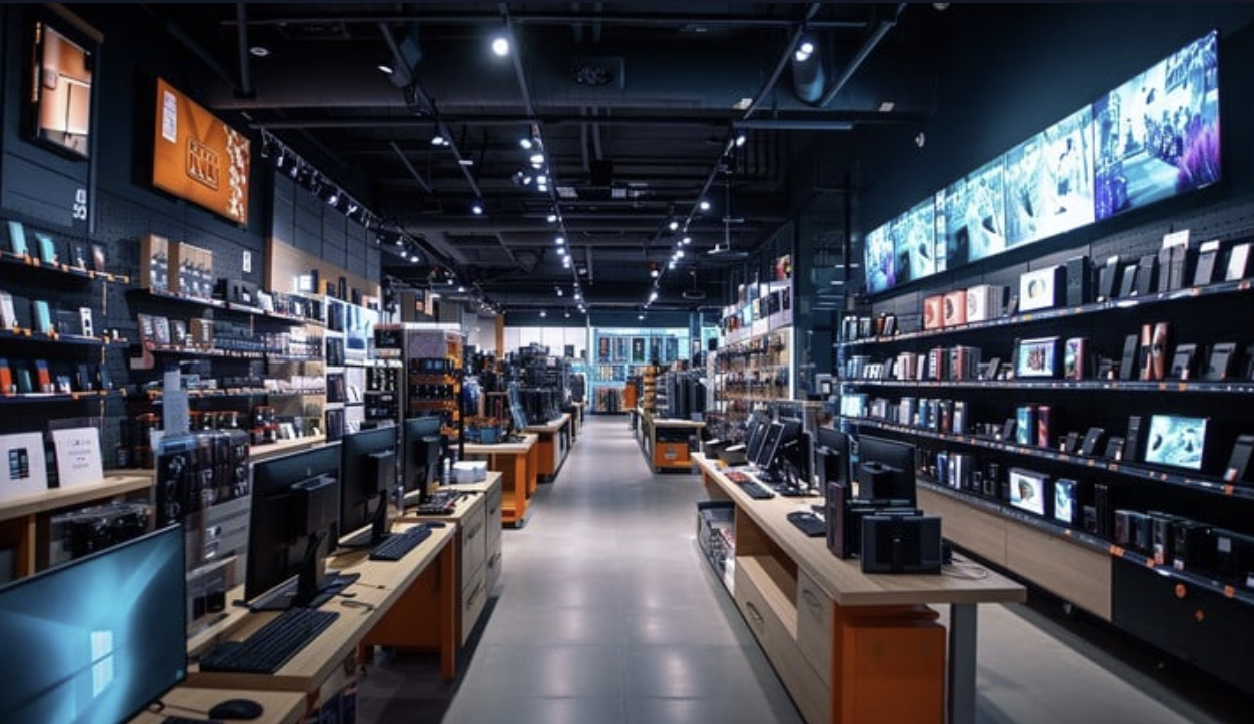
New products are the lifeblood of retail. They drive sales, create excitement and keep customers coming back. But how do products get on store shelves? Getting from an idea to a retail shelf is not simple. It takes strategy, timing and clean execution.
This guide breaks down the new product cycle, from idea to retail placement. It shows what it takes to launch a product in stores and then scale it.
Key takeaways
- The new product cycle runs from the first idea through launch to decline or reinvention. Where your product sits in that cycle changes which retailer conversation makes sense.
- Market research and clear differentiation come before any retailer conversation. A buyer’s first question is what your product replaces or beats.
- Aligning with retailer needs matters more than your own enthusiasm. The retailer is solving their assortment problem, not yours.
- Build an online presence before retail. It gives a buyer proof that demand exists, not a promise that it will.
- Your distribution model changes your margin, your minimum order and which retailers you can realistically serve.
- Retailbound is a retail channel management consultancy. We help brands launch and scale in over 150 retailers across the US and Canada.
Quick check
Need Help Getting Into Retail?
Our retail consultants were once large retail buyers. They can help you pick the right retail channels, prepare your brand for buyers and plan for retail growth.
What Is the New Product Cycle?
The new product cycle is the path every new product follows. It runs from the first idea to launch, and in time to decline or reinvention. Knowing this cycle helps retail-focused manufacturers decide when and how to bring new products to market.
The stages usually include:
- Introduction: The product is new and awareness is low. Marketing has to build traction.
- Growth: Sales rise fast and the brand starts to gain market share.
- Maturity: Sales level off as competition grows. Fresh ideas keep interest alive.
- Decline: Sales drop as the market fills up or newer products arrive. You decide whether to refresh the product or retire it.
Knowing where your product stands in this cycle helps you plan launches, marketing budgets and future updates.
Are You Asking How Shelves Get Stocked, or How to Get Your Product Stocked?
This guide is for brands trying to get a product they make onto a retailer’s shelf. It covers how the decision gets made, who makes it, and what has to be true for the answer to be yes. Maybe you want to know something else. How does a store keep its existing stock on the shelf? How do goods move from a distribution center, and what triggers replenishment? That is the supply chain side, and our distribution material covers it properly.
Understanding Today’s Retail Environment
Before you plan retail distribution, you need to understand the retail environment you’re entering.
Market Research & Differentiation
- Market Analysis: Find current trends, top competitors and the gaps your product can fill.
- Competitive Benchmarking: Study similar products. Note what they do well and where they fall short.
- Sales Data: Use online or past sales data to show retailers your product makes money.
Pro tip
Do your market research standing in the aisle you want to be in, not online. Write down every product on that shelf, with its size, its price and its facings. A buyer will ask what your product displaces. The only credible answer names a specific item on their planogram today.
Aligning with Retailer Needs
- Demographic Targeting: Tailor your pitch to the retailer’s core audience. That might be parents, millennials or fitness fans. Start by choosing the right retailer for your product.
- Customer Feedback: Refine your product with early customer input. Retailers love improvements backed by data.
Building an Online Presence Before Retail
Retailers increasingly want proof of consumer demand online before they commit shelf space.
- Digital Marketing: Build awareness with paid ads, influencer partnerships and content written for search.
- Social Proof: Collect real reviews and testimonials to show traction.
- Online Communities: Join niche groups and forums. Use them to refine your message and build advocates.
Pro tip
Track where your online orders ship before you pick a retailer to approach. Demand concentrated in a few metro areas is an argument for a regional chain that serves them. It is also the rare kind of proof a buyer can verify without taking your word for anything.
How New Products Are Developed
A successful retail product starts with research, testing and validation. Here is how most consumer brands develop new products, step by step:
- Idea Generation: Gather ideas from customers, employees and market trends.
- Concept Testing: Test product ideas with focus groups or surveys.
- Product Design & Development: Build prototypes and refine them from test feedback. This is also when you weigh outsourced and domestic manufacturing.
- Market Testing: Soft launch in a few areas or online to gauge interest.
- Commercialization: Lock in pricing, packaging, marketing and distribution for a full launch.
Each step cuts risk. When your product hits shelves, it is ready to perform.
How New Products Get Into Retail Stores
Launching a new product in retail takes a series of planned steps:
- Work with Distributors or Brokers: They help you meet retailer requirements and secure meetings.
- Secure Retail Placement: Pitch your product’s story, sales performance and margins.
- Create Awareness: Use advertising and in-store promotions to drive foot traffic.
- Track Performance: Watch sales and gather retailer feedback. Adjust pricing or marketing as needed.
For a worked example, see how to get your product into Ace Hardware or how to get your product into Target. Both show the same steps applied to one retailer.
Note
Shelf space is finite. When a retailer says yes to your product, they say no to something already on the shelf, or to another brand pitching the same slot this review cycle. Every part of your pitch should make that trade easy to justify. That usually means talking about the category’s performance, not your product’s features.
Getting Through the Retail Entry Process
Breaking into retail can be hard. Focus on these areas to make the process smoother:
- Supply Chain Readiness: Retailers expect steady supply and reliable fulfillment.
- Financial Preparedness: Budget for packaging redesigns, promotions and retailer fees.
- Networking: Go to trade shows and pitch events to meet buyers and category managers.
- Transparency: Be upfront about what you can produce and your lead times.
- Consistent Communication: Keep retailers updated on stock, marketing and new developments.
How Long the Journey from Idea to Shelf Takes
The stages are easy to list and hard to schedule. The total length is not what trips most brands up. Each stage has a gate at the end of it, and the next stage cannot start until that gate is closed. Skipping ahead does not save time. It just moves the delay later, where it costs more.
| Stage | Gate that has to close before the next stage starts | What the length depends on |
|---|---|---|
| Research and concept | A defined shopper, a defined category, and a reason the product exists in that aisle | How much is already known, access to category data |
| Prototype and sourcing | A working sample and a manufacturer who has quoted it | Tooling, number of iterations, domestic or overseas production |
| Packaging and compliance | Final artwork, UPCs assigned, any required testing and certification complete | Category requirements, lab turnaround, number of packaging revisions |
| Costing | Landed cost, wholesale price and suggested retail that all work together | Freight and duty, case pack, order quantity |
| First approach to a retailer | Sell sheet, samples and a commercial answer to every obvious question | Whether you have an introduction, a rep or a distributor, or are starting cold |
| Review window and buyer decision | Your product entered in the review the category actually runs | Whether the retailer buys to a fixed calendar and where you land in it |
| Purchase order | Terms agreed, vendor setup complete, paperwork in | Vendor onboarding, EDI, insurance, item setup |
| Production and fulfillment | Goods built, packed, labeled and routed to the retailer’s requirements | Component lead times, factory capacity, freight mode |
| On shelf | Product set in the planogram and available to buy | Reset schedule, store count, distribution method |
Two stages stall far more often than the rest. Neither has anything to do with the product. The first is compliance paperwork. Testing, certification and labeling rules get discovered late, usually after the artwork is printed. The fix is a reprint and a retest, not a phone call.
The second is the category review window. Retailers that buy to a calendar review each category on a schedule. If you are not ready when that review runs, the assortment is set without you. There is no partial credit for being nearly ready. You wait for the next cycle.
When you cannot put an honest length on a stage, find out what it depends on. Get that answer first. A brand that knows its tooling time and its testing turnaround can build a real calendar. A brand that assumes both are quick is planning around a number it made up.
Distribution & Marketing Strategies
Choosing the Right Distribution Model
- Direct Distribution: Sell straight to consumers through your own website or pop-up shops. Know what 3PL fulfillment costs before you count on this route.
- Indirect Distribution: Use distributors, wholesalers or sales reps to expand your reach. Our guide to retailer and distributor roles explains who does what.
Pro tip
Model your unit economics under each distribution route before you talk to anyone. Include the route where a distributor takes a cut, and the route where you ship direct and carry the routing compliance risk yourself. Brands often find the model they assumed leaves no margin. Repricing after a purchase order is far harder than pricing your product for retail before one.
Marketing Your Product Effectively
- Pre-Launch Teasers: Build buzz with sneak peeks or influencer previews.
- Launch Events: Host product demos, live streams or retail activations. Time them around the Q4 shopping events where that fits your category.
- Advertising Campaigns: Combine digital ads, PR and retail media to get the most exposure.
Feedback and Continuous Improvement
Once your product is in the market, your work isn’t over.
- Gather Reviews: Ask for customer feedback online and in store.
- Analyze Data: Use what you learn to refine packaging, pricing or product features.
- Iterate Constantly: Small updates driven by data can extend the product’s life cycle and lift sales.
What Happens After your Product Reaches the Shelf
A first placement is a trial. The retailer has bought your product once. Everything that follows depends on what happens in the aisle after that.
The first weeks are about presence, not sales. Product gets delivered and sits in a backroom. It gets set in the wrong section, or on a bottom shelf, or without a price label. None of that shows up in a sales report as a merchandising problem. It shows up as a bad product. Get someone into stores. Confirm the item is out and in the right place. Fix what you find while it is still early enough to matter.
Sell-through is the number the retailer is watching. Not how much they bought from you, but how fast it leaves the shelf relative to the space and stock it takes up. A buyer compares that number against the rest of the category and against whatever your item displaced. Work out where you will see it before you need it. That might be a vendor portal, a rep, reorder patterns or counting facings yourself.
What a brand can do in those weeks. Fix merchandising problems. Help staff at the busiest stores understand the product. Run demos where the category supports them. Put local advertising behind the chain that carries you, and tell your own customers where to find you. Retailers notice which brands bring their own shoppers. In a first listing it is the most persuasive thing you can do, because it is the part they cannot do for you.
The reorder decision, and the other one. A reorder means the numbers worked well enough that the buyer would rather keep you than go looking. A delist means the space was worth more to something else. Neither is usually a dramatic conversation, and the brand often hears about it late. A delisted product is also the first thing the next buyer in that category finds when they look you up. That is why brands do better starting with accounts they can support than with the biggest name that will take a first order.
The Role of Retailers in New Product Success
Retailers are more than sales channels. They are partners in your success. They control shelf space, shape what shoppers discover, and can make or break a launch.
To win them over:
- Show clear sell-through potential with data and marketing support.
- Offer promotions and merchandising plans to help drive traffic.
- Communicate often and deliver reliably. Retailers value consistency and professionalism.
Who Actually Decides Whether Your Product Gets Shelf Space
“The retailer” is not one person. Brands that get stuck are usually pitching to the wrong one. Here is who holds which part of the decision.
The category buyer or merchant. This person owns the assortment for your category and decides what gets listed. They are measured on the whole category, not on your product. So they ask what your item adds to their numbers and what risk it brings. They are won over by proof that demand already exists, a price that works in their aisle, and a brand that will not create problems for their stores.
The category manager or planogram owner. Being listed and being on a shelf are two different things. Someone has to decide what fits, where it sits, how many facings it gets and what moves to make room. Your case pack, your package size and how your item merchandises are real constraints to this person. A product that will not hang, will not stack or does not fit the shelf depth creates work. Work is a reason to say no.
The independent store owner or franchisee. In independents and in many franchised chains, the person ordering is the person who owns the risk. They decide in the aisle, usually in one conversation. They are choosing what represents their store as much as what sells. They are won over by the product in their hands, a minimum order they can afford, and confidence that you will pick up the phone.
The distributor or rep. In some categories you do not reach the buyer directly. A distributor or a rep group holds the relationship and decides which lines they carry to a buyer. They are a gate before the gate. They ask whether your line is worth their time against everything else in their bag. That is mostly a question of margin, support and how easy you are to work with.
The internal review committee. Larger chains rarely let one person add a new vendor alone. A buyer’s recommendation goes to a review. Merchandising, finance, supply chain and sometimes legal each look at it from their own angle. Your buyer becomes your advocate in a room you are not in. That is why the materials you leave behind matter more than the meeting itself.
Underneath all of them sits the same fact. Shelf space is finite. Every yes is also a decision to drop something that is already earning money. A pitch that only explains why your product is good asks the buyer to work out what comes off the shelf. That is the hard part of their job, and it is not yours to skip.
Key Factors for New Product Cycle Success
To succeed in retail, keep these best practices in mind:
- Stand Out Visually: Eye-catching packaging and a clear value message matter.
- Strong Marketing Support: Invest in campaigns that drive awareness and foot traffic.
- Competitive Pricing: Make sure your product offers real value for money.
- Retail Relationships: Build trust with buyers and category managers early.
Conclusion: Setting Your Product Up for Retail Success
A successful launch means understanding the whole product cycle, from concept to retail execution. Combine market research, strong retailer partnerships and smart marketing. Do that, and you greatly improve your odds.
Free consultation
Talk to a retail expert about your product.
We build the retailer list, the pricing model, and the buyer pitch, so your first meeting starts from your numbers instead of theirs.
Retainer only, no commission · 150+ retailers · No obligation
Frequently asked questions
Through three main routes. Direct from the brand. Through a distributor or wholesaler that carries many brands. Or through the retailer’s own private label programs. Which route applies to you depends on the category and the retailer’s size. It also changes your margin and your minimum order.
Prepare the product first. That means retail-ready packaging, barcoding, compliance and costing that survives retail margin. Then approach retailers through whichever channel they use. That might be a store owner, a category buyer, a supplier portal, a distributor or a rep. The preparation decides the outcome. The approach is just the delivery.
The largest chains run structured supplier programs. They have their own application routes, compliance standards and fixed category review windows. They expect a brand that can already fulfill at scale. Most brands reach them after proving sell-through in smaller accounts, not as a first placement.
Store brands, also called private label, are made for the retailer by a contract manufacturer. They sell under the retailer’s own name. It is a different route from selling your own branded product. It trades brand ownership for volume, so it suits manufacturers more than it suits brands.
It depends far more on the retailer’s calendar than on your readiness. Category review windows, compliance paperwork and production lead times set the pace. A submission that misses a review window waits for the next one, no matter how good the product is.