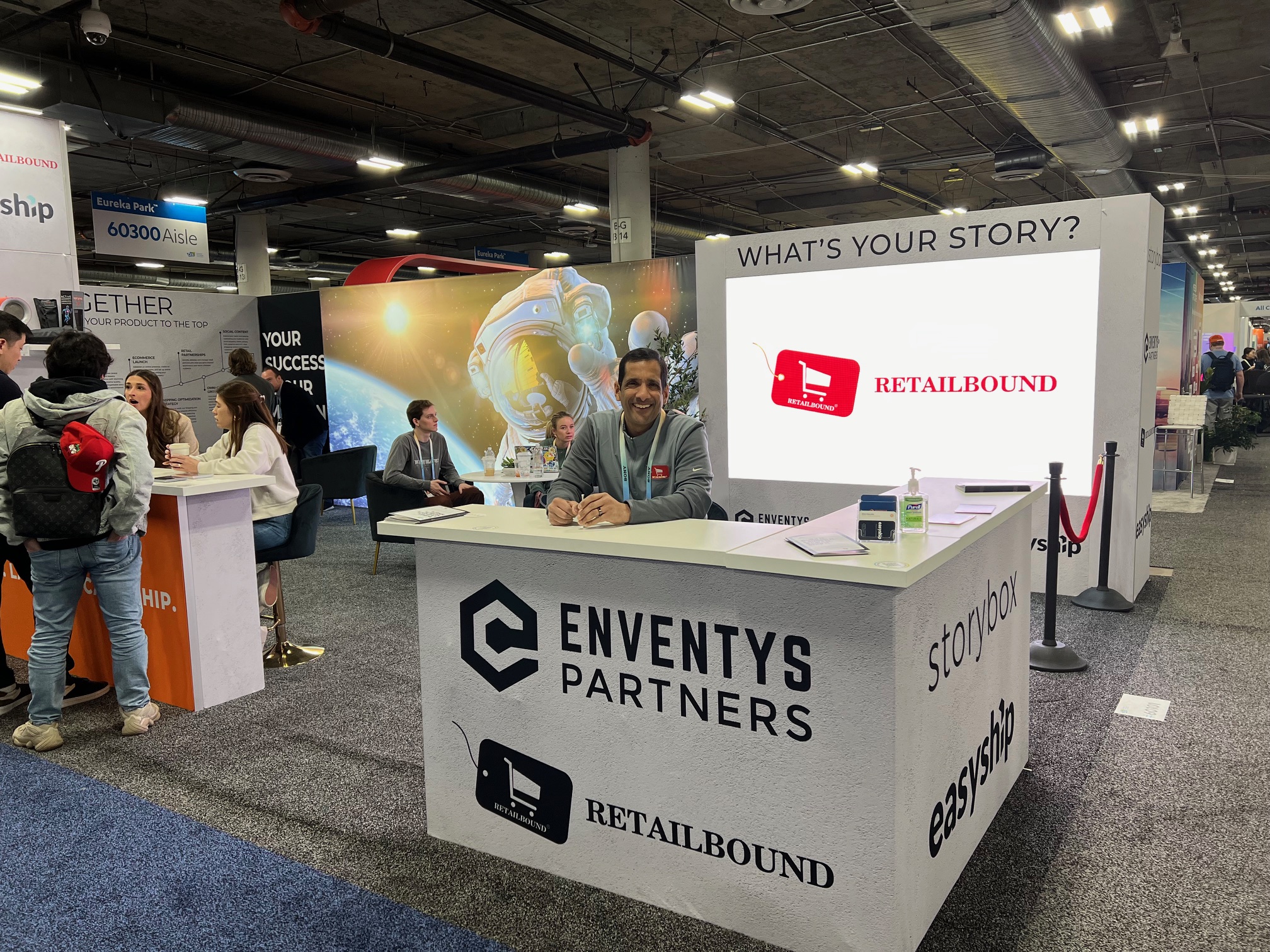
When I launched Retailbound back in the mid 2000s, I had one clear goal — to help both product startups and established manufacturers scale successfully in retail. Nearly two decades later, the picture of me at the 2024 Consumer Electronics Show reminds me how far we’ve come — and how much I’ve learned along the way.
Every month, I get calls from retail buyers or professionals looking to start their own consulting agencies. They always ask the same thing: “What’s your secret?”
There’s no single “secret,” but there are plenty of hard-earned lessons. Here are the 10 biggest lessons I’ve learned about running a successful agency — plus a few bonus insights I’ve picked up since then.
Key Takeaways
- Running an agency is hard work before it is anything else, and no amount of process removes that.
- Pick one thing and be known for it. Retailbound has helped product startups and established manufacturers scale in retail since the mid 2000s, and the focus is what made that possible.
- Presenting work is not selling it. The same deliverable lands differently depending on whether the client is told what it means for them.
- Choose clients carefully at the start and you rarely have to end things later. Five clients have been fired in nearly twenty years, because the choosing happens first.
- Over-deliver without under-valuing. Doing more than promised builds the relationship, discounting to do it destroys the business.
- Hire people smarter than you, stay reachable, standardize the repeatable work, and when the process and your instinct disagree, trust your gut.
1. It’s Hard Work, Really Hard Work
Building an agency from scratch isn’t glamorous. The hours are long, the pay (at first) is low, and the challenges are endless. You need a strong support system — people who will cheer you on when things get tough.
When I left a stable, high-paying corporate job to start Retailbound, many thought I was crazy. But my wife believed in me. Her support gave me the strength to endure those early, uncertain years — and it made all the difference.
Lesson: Success doesn’t happen overnight. You have to outwork, outlast, and outlearn everyone else.
2. Identify Your “One Thing”
If you’ve seen City Slickers (1991), you might remember Jack Palance’s character saying:
“One thing. Just one thing. You stick to that, and the rest don’t mean sh**.”
That advice applies perfectly to business. Find your “one thing” — the core service or value that truly defines you — and stick with it.
Many agencies make the mistake of constantly expanding their services to please clients. But focus is power. Do what you do best, and clients will keep coming back.
Why a Specialist Agency Runs Differently from a Marketing Agency
Almost every agency writing about agency life is a generalist marketing or advertising shop. A consultancy that works one industry deeply is a different business, with different economics, and the differences are worth naming because they change how you should run it.
The first difference is where the work comes from. A generalist agency pitches. A specialist gets referred, and the referrals come from inside the industry: former clients, retail buyers, sales reps, distributors, other agencies who do not do what you do. That takes years to build and then it compounds, because everybody in a vertical talks to everybody else. The flip side is that reputation compounds in both directions, and one badly handled engagement travels a lot further than it would in a generalist market.
The second is pricing. When you serve many industries, you are selling hours and capability, and the anchor is what other agencies charge. When you serve one industry deeply, you are selling a result the client can put a number on, and the anchor is what that outcome is worth to them. That is a better basis for pricing and it requires you to be confident about what you actually deliver.
The third, and the most valuable, is that knowledge is reusable. What we learn about a retailer’s vendor requirements, a category’s review calendar or a buyer’s priorities applies to the next client immediately. A generalist starts from scratch with every new industry. A specialist starts every engagement already knowing most of the terrain, which is why we can move faster than the hours would suggest.
The cost of all this is concentration, and it is real. When retail has a difficult year, it is a difficult year for every client at once, not for a diversified portfolio. There is no other vertical carrying you through. That is the trade, and anyone specializing should understand they are accepting it.
In practical terms:
- Referrals replace pitching, which means relationships are the business development function
- Reputation compounds, in both directions, faster than in a generalist market
- Pricing anchors to outcomes, not to hours or to competitor rate cards
- Knowledge is reusable across clients, so experience translates directly into speed
- You can say no more easily, because a specialist’s pipeline is less dependent on any single deal
- Concentration is the risk, because a downturn in the vertical arrives everywhere at once
3. Don’t Just Present Your Work, Sell It
Selling doesn’t end after you close a deal. You’re always selling — your ideas, your expertise, your results.
Just like a marriage, client relationships require ongoing care. You have to continually prove that hiring your agency was the right choice.
Lesson: Every client interaction is an opportunity to reinforce trust and value.
4. Not All Clients Are Created Equal
One of the biggest mistakes agency owners make is taking on the wrong clients just to pay the bills. In the short term, it feels necessary — but in the long term, it can derail your agency.
“Problem clients” drain your time, energy, and morale. Be selective. The right clients value your expertise and align with your vision.
In nearly 20 years, I’ve only had to fire five clients — because we’ve learned to choose wisely from the start.
How we Choose Which Clients to Work With
In nearly twenty years, we have had to fire five clients. That number is low because most of the work happens before the contract, not after it. Here is the method.
| We look for | We walk away from |
| A product that is genuinely ready, or a founder willing to make it ready | A brand that wants the meeting before the product is finished |
| Realistic expectations about how long retail takes | Anyone who needs a national account this quarter |
| A decision maker in the room | A contact who has to take everything back to someone we never meet |
| Budget that matches the scope of work | A budget set by what is left over after everything else |
| Willingness to hear that something is not working | A brand that has already decided and wants agreement |
| A category and a channel we know | A request to work somewhere we would be learning on their money |
| A commercial model that survives wholesale margin | Numbers that only work direct to consumer, with no plan to change them |
The first conversation does most of the filtering. We ask what the product costs to make and land, what it sells for now, which retailers they are targeting and why, who makes the decisions, and what they expect to have happened in six months. The answers to those five questions tell you almost everything. A founder who does not know their landed cost is not ready. A founder who names a national chain and cannot say why that retailer’s customer would buy the product has not done the work. A founder who expects a purchase order within a quarter is going to be disappointed by reality and will blame whoever is closest.
The warning signs before a contract are consistent. Urgency with no reason behind it. A previous agency described entirely in terms of their failures. Reluctance to share numbers. Scope that keeps growing during the negotiation. None of them is disqualifying on its own, and two together usually are.
Now the other half, because an article about choosing well that never mentions choosing badly is not much use. The five clients we did have to let go had things in common. In each case the expectations had been set before we were involved, usually by a forecast somebody had made internally. In each case the issue surfaced early and we hoped it would improve rather than raising it. And in each case the fix was the same: an honest conversation, a clear statement of what we could and could not deliver, and an orderly end with work handed over properly. The lesson from all five is the same one, and it is uncomfortable. The problem was visible almost immediately and we acted a long time later.
Pro Tip: Ask in the first call who signs off and who else has to agree. An engaged founder with two silent partners behind them is a different project from the same founder with authority, and it is the single question that predicts whether the work will stall. Ask it before the proposal, not after.
5. Over-Deliver, But Never Under-Value
At Retailbound, we always strive to exceed expectations — even if that means putting in extra hours. But while we go above and beyond, we never undervalue our time or expertise.
Over-delivering builds credibility and client loyalty. It’s why we’ve earned 60+ glowing testimonials on my LinkedIn page. It also allows us to charge fair prices without needing to discount our worth.
Lesson: Always provide more value than expected — but don’t sell yourself short.
Pro Tip: Over-deliver with attention rather than with scope. Extra hours of unbilled work resets the client’s idea of what your fee buys and you never get that back. An unprompted call flagging a problem before the client notices it costs fifteen minutes and is worth more than a free deliverable.
6. Hire People Smarter Than You
This one’s simple: hire slow and fire fast.
Surround yourself with people who challenge and inspire you. I’ve been fortunate to work with incredibly talented individuals who are far smarter than me in their respective areas.
Early on, I created a Strategy Advisory Board of experts to help shape Retailbound’s growth. We refresh it every few years to keep new ideas flowing. The result? Continuous improvement and innovation.
7. Network Like It’s Your Job
Networking has been one of the most powerful tools for growing Retailbound. Whether it’s on LinkedIn, at trade shows, or through industry events, building relationships has opened countless doors.
In fact, many of our clients come from referrals from other agencies. I make it a goal to add at least one meaningful connection to my network each month.
Pro tip: Networking isn’t just about finding clients — it’s about learning from peers and exchanging best practices.
8. Stay Accessible to Clients and Employees
As your agency grows, it’s easy to become less available. But accessibility builds trust — and trust builds loyalty.
Make time for your clients and your team. Keep an open-door policy. Check in regularly. You’ll be surprised how far genuine accessibility can take your business.
9. Standardize Your Processes
If you want scalability and consistency, you need clear, repeatable systems.
At Retailbound, every consultant follows the same core processes, templates, and tools I developed years ago. This structure ensures consistent quality, faster onboarding, and smoother collaboration.
Lesson: Standardization doesn’t kill creativity — it amplifies it by freeing you to focus on strategy, not chaos.
The Processes Worth Standardizing First
The advice to standardize is easy to agree with and hard to act on, because a small agency cannot build every process at once. Build them in this order. Each one prevents a specific failure, and the early ones prevent the expensive failures.
1. The intake questionnaire. A fixed set of questions every prospect answers before a proposal exists. It prevents the worst outcome in the whole list, which is scoping work for a client who was never a fit, and it does most of the qualifying for you.
2. The scoping and pricing template. A standard structure for what is included, what is not, what it costs and what the client has to supply. It prevents scope creep, which is the single largest silent cost in a services business, and it stops you pricing from your mood.
3. The kickoff. A repeatable first session that sets expectations, names who does what, and establishes how you will communicate. It prevents the slow misalignment where three months later the client thought you were doing something you never agreed to.
4. The weekly client update. Same format, same day, whether or not there is news. It prevents the client wondering what they are paying for, which is the thought that precedes every cancellation, and it forces your own team to keep momentum visible.
5. The deliverable review before anything goes out. A second pair of eyes on everything that reaches a client, to a checklist. It prevents the errors that cost credibility out of proportion to their size, and credibility is most of what a consultancy sells.
6. Invoicing and collections. A set schedule, a set format, and a defined sequence when an invoice goes unpaid. It prevents the awkwardness that leads small agencies to let receivables drift, and cash flow rather than profit is what closes them.
7. Offboarding. A structured end: what is handed over, what is documented, what happens to access and files, and a conversation about what worked. It prevents a good engagement ending as an anticlimax, and it is where the best referrals come from.
Most agencies build these in roughly the reverse order, starting with the deliverable templates because that is the visible work, and getting to intake and collections only after being hurt by both. The order above is the one that would have saved us the most.
Pro Tip: Write the process the second time you do something, not the tenth. By the tenth you have already absorbed the cost of doing it differently nine times, and you have stopped noticing the steps that a new hire will get wrong. The first documented version does not have to be good, it has to exist.
10. Trust Your Gut
Experience teaches instincts — and instincts protect your business.
Sometimes, a potential client looks great on paper but “feels off.” When that happens, listen to your gut. Saying no to the wrong opportunity can be just as valuable as saying yes to the right one.
Bonus Lessons for Long-Term Agency Success
After sharing this list on LinkedIn a few years ago, people asked, “Why only 10 lessons?” So here are three more powerful lessons that have kept Retailbound thriving for nearly 20 years.
11. Don’t Be Afraid to Take Risks
Starting a business is always a risk. I left a comfortable job, with a family to support and a mortgage to pay, to chase a vision. But taking calculated risks is essential for growth.
From redesigning our logo to reinventing our service offerings, every bold move came with risk — and reward. Playing it safe rarely leads to success.
12. Never Be Satisfied
Complacency kills businesses.
The retail industry has changed dramatically in the past 30 years — and so have we. Staying curious, open to partnerships, and willing to adapt has kept Retailbound ahead of the competition.
Always look for the next evolution. Whether you’ve been in business for 2 months or 20 years, never stop learning, experimenting, and improving.
13. Consistency Is Your Best Friend
If there’s one word people use to describe me, it’s “consistent.”
From our weekly Sunday night client updates to using uniform templates across our team, consistency is at the heart of our success. It builds trust, creates predictability, and reinforces professionalism.
Lesson: Consistency isn’t boring — it’s your greatest growth strategy.
What Twenty Years Teaches that Five Does Not
Plenty of people write about what they learned in their first five years. Fewer write from nearly twenty, and the difference is not simply more of the same. Some things only become visible once you have been through more than one cycle.
You find out which client relationships were real. Everybody looks like a partner when business is good. A downturn sorts it very quickly: some clients disappear the moment budgets tighten, and others call to ask how you are doing and what they can commit to. The ones who stayed were almost never the ones paying the most. They were the ones where the work had visibly changed something for them, and where we had been honest about what was not working as readily as about what was.
Most of the processes that felt essential in year three were gone by year eight. We built systems for problems we had at the time, and a good half of them turned out to be scaffolding rather than structure. The ones that survived are the ones that reduced variation in what the client receives, not the ones that made us feel organized. It is worth being willing to delete a process you were proud of.
The industry changed underneath the business, more than once. Retail has changed dramatically over the past thirty years, and an agency serving it does not get to stand still while that happens. The channels our clients needed, the questions buyers asked them, and what retail readiness even means have all moved. Our answer has been to change the services and keep the method, rather than the other way around.
The expensive early decisions were rarely the ones that felt risky at the time. Leaving a stable job felt like the big risk, and it was not the one that cost the most. The decisions that hurt were the quiet ones: taking a client who was not a fit because the month looked thin, delaying a hire because the timing was never quite right, keeping a service running because we had always offered it. Risk is visible. Drift is not.
And a short list of things that have not changed at all. Doing what you said you would do, when you said you would do it. Answering the phone. Being straight with a client when their plan will not work. Twenty years of change in retail has not touched any of those, and they remain the whole basis of the business.
Final Thoughts and Why Celebrate the Wins
Running an agency isn’t easy. It’s filled with challenges, risks, and learning moments. But don’t forget to celebrate your victories — big and small.
As Retailbound approaches 20 years in business, I’m grateful for every lesson learned, every client partnership, and every milestone achieved. Here’s to the next 20 years of growth, innovation, and helping brands succeed in retail!
Thinking About Launching Your Product Brand in Retail?
If you’re ready to bring your product into major retailers but need help navigating the process, Retailbound can guide you every step of the way. Schedule a free consultation with one of our retail experts and discover how to get your product retail-ready, connect with the right buyers, and drive long-term retail growth.
Frequently Asked Questions
How to run a successful consulting business?
Choose one specialty and become the obvious name in it, select clients before you have to fire them, standardize the repeatable work early, hire people who are better than you at their part, and stay reachable. The lessons in this article are the long version of that list.
What are some good business ideas for an agency?
The better question is which one thing you can be known for. A generalist agency competes on price and pitch. A specialist consultancy in a defined vertical competes on knowledge that gets more valuable with every client, and referrals arrive from inside the industry rather than from cold outreach.
What are the 5 C’s of consulting?
Versions differ, but they usually cover the client, the company, the competition, the context and the cost. They are a framing device rather than a method. In practice the work is won on whether the client believes you have solved their specific problem before.
What are some important lessons that can be learned from marketing?
That presenting is not selling. The same piece of work lands completely differently depending on whether the client is walked through what it means for their business. That lesson transfers out of marketing into every kind of client service.
What is the McKinsey 3 rule?
It usually refers to the rule of three in communication, structuring an argument around three supporting points so it can be held in the listener’s head. Worth knowing when you are selling work rather than presenting it, because a client who can repeat your argument internally is a client who can get it approved.
About the Author
Yohan Jacob is the President and Founder of Retailbound, a full-service retail channel management consultancy. With decades of experience in retail buying, merchandising, and product strategy, Yohan has helped countless startups and manufacturers successfully navigate the retail landscape. Retailbound specializes in retail strategy development, buyer engagement, sales management, and channel marketing — helping brands grow both in-store and online.