Advice
How 2025 Tariffs Create a Golden Opportunity for Emerging Retail Brands
Why the tariff opportunity for emerging retail brands is real, what buyers do while costs move, and how to win shelf space before the window closes.
 Yohan Jacob
12 min read
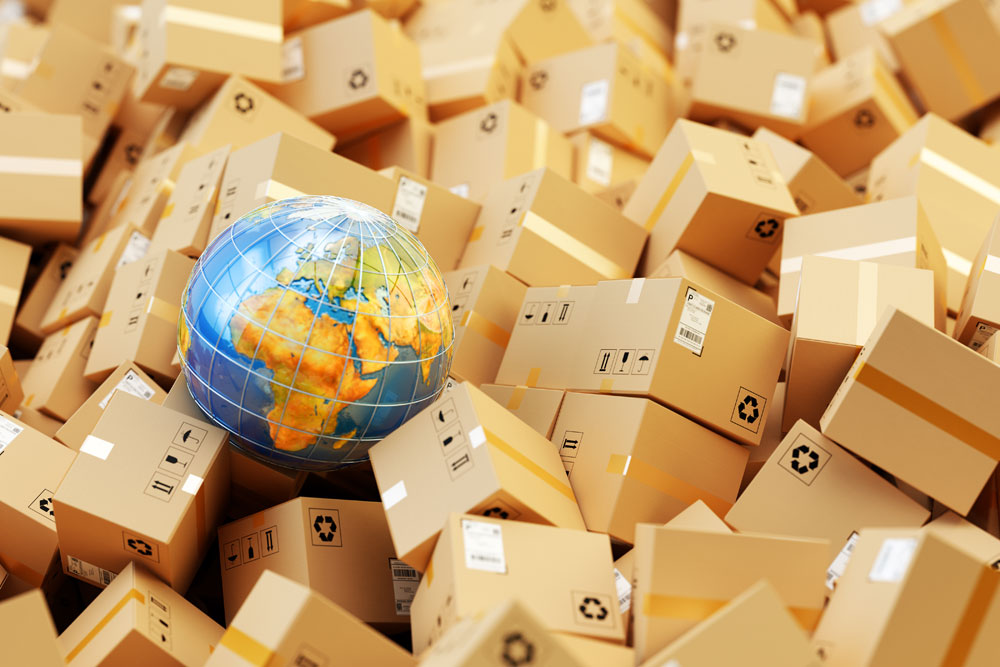
In April 2025, the United States put sweeping import tariffs in place. That brought disruption, and it brought opportunity. The tariff opportunity for emerging retail brands is real, and the moment to act is now.
A new tariff policy took effect on April 5, 2025. It placed a 10% baseline tariff on all imports into the U.S. Reciprocal rates reach up to 50% for key trade partners like China, Mexico, and Canada. Legacy brands are scrambling. They face rising costs and supply chain problems. Meanwhile, emerging brands, both U.S.-based and international, have a once-in-a-decade chance to break through.
You might sell through brick-and-mortar retailers, catalogs, TV shopping networks, or online marketplaces. Either way, the U.S. retail market is still fertile ground for growth.
Key takeaways
- A tariff policy took effect on April 5, 2025. It placed a 10% baseline tariff on all U.S. imports, with reciprocal rates up to 50% for China, Mexico and Canada.
- Disruption at the top of a category is an opening at the bottom. GEP’s 2025 pricing analysis found large brands often need 60 days or more to adjust prices, and a smaller brand can move in days.
- Demand held up while costs rose. The 2025 retail outlook cited here projected retail spending to grow 3.1% and durable goods spending 4.7%, with inflation at 2.3%.
- Shoppers changed what they buy, not whether they buy. A February 2025 Numerator survey found 76% of Americans ready to adapt, 30% planning to buy fewer imports and 41% hunting for better deals.
- Buyers open up when their current suppliers send price increase letters. That conversation is the opportunity, and it closes once the category settles.
- The advantage is speed, not cost. Plan for the day the larger brands finish repricing, because that is when the window shuts.
Where the tariff picture stands now
Start with the dates. They decide how to read everything that follows.
The policy in this article took effect on April 5, 2025. It placed a 10% baseline tariff on all imports into the U.S. Reciprocal rates reached up to 50% for key trade partners, including China, Mexico and Canada. That is where this began. Since then, rates, exemptions and the legal standing of specific measures have all been contested. So if you are reading this today, check the current tariff schedule for your own product codes. Don’t rely on any article for that, including this one.
The figures below are dated on purpose. The consumer behavior data comes from a February 2025 consumer trends survey by Numerator. The spending, inflation and interest rate figures come from Deloitte’s 2025 U.S. Retail Outlook. The equity index figure comes from Bloomberg for 2025. The household cost estimate comes from the Peterson Institute. The willingness-to-pay figure comes from Simon-Kucher, 2025. The repricing finding comes from GEP’s 2025 pricing analysis. Read them as a record of the conditions when the disruption started, not as a report on this week.
The argument holds anyway, and this is the important part. No single tariff rate created the opening for an emerging brand. The gap did. Input costs move at one moment. An incumbent supplier can act on it only later. What a retail buyer does in that gap is the opportunity. Large suppliers reprice slowly. Their pricing is contracted. Their promotional calendars are committed. Their purchase order pipelines are long. Buyers face margin pressure they did not plan for. So they become willing to meet suppliers they had no reason to meet a quarter earlier.
That mechanism runs whether rates go up, come down or get litigated. It runs on cost volatility, not on cost direction. So the practical question for an emerging brand is not where tariffs settle. It is whether you are ready to have the conversation while the window is open. The window closes when pricing settles and the incumbents finish adjusting.
Note
Tariff policy on this topic has moved many times. It is still subject to change and legal challenge. Every rate and projection in this article is tied to a named source and a date. Check the current position before you price anything or sign a supply agreement.
Why Tariffs Are Fueling Retail Disruption, and Opportunity
The impact of these new tariffs is being felt across industries. Established consumer brands face tough choices. They can absorb the higher costs. Or they can raise prices and risk losing loyal customers. If you import, start with strategies to protect your supply chain before the cost reaches your shelf price.
Pro tip
Confirm your HTS classification with a customs broker before you quote anything to a retailer, and get it in writing. Classification decides your rate. Plausible alternative codes can carry very different rates. A quote built on the wrong code is a margin problem you discover after you have a purchase order. Retailers now ask for country of origin and classification detail during vendor onboarding, so you will need it in writing anyway.
But this disruption opens the door for new, agile brands. According to a February 2025 consumer trends survey by Numerator, 76% of Americans say they’re ready to adapt:
- 30% plan to reduce purchases of imported goods
- 41% are hunting for better deals and discounts
Emerging brands that offer value, quality, and flexibility are well placed to meet this demand.
U.S. Consumer Spending Remains Strong in 2025
Import costs are rising. Even so, consumer confidence and spending are holding steady. That is a key signal for retail brands. According to Deloitte’s 2025 U.S. Retail Outlook:
- Overall retail spending is projected to grow by 3.1%
- Durable goods spending will climb 4.7%
- Inflation remains moderate at 2.3%
- The Federal Reserve has cut interest rates to 3.75 to 4%, which encourages consumer activity
Retail equities are thriving too. The S&P 500 Retailing Index is beating the market by 2.5% in 2025, per Bloomberg. Household costs are expected to rise by an estimated $1,200 a year, according to the Peterson Institute. Even so, 60% of consumers are willing to pay more for essential products (Simon-Kucher, 2025).
| Measure | Figure | Source and date |
|---|---|---|
| Baseline tariff on all U.S. imports. | 10%, with reciprocal rates up to 50%. | Policy took effect April 5, 2025. |
| Americans who say they are ready to adapt. | 76%. | Numerator consumer trends survey, February 2025. |
| Plan to buy fewer imported goods. | 30%. | Numerator, February 2025. |
| Hunting for deals and discounts. | 41%. | Numerator, February 2025. |
| Projected retail spending growth. | 3.1%. | 2025 retail outlook cited in this article. |
| Projected durable goods spending growth. | 4.7%. | 2025 retail outlook cited in this article. |
| Inflation. | 2.3%. | 2025 retail outlook cited in this article. |
| Federal Reserve interest rate. | 3.75 to 4%. | 2025 retail outlook cited in this article. |
| S&P 500 Retailing Index outperformance. | 2.5% in 2025. | Bloomberg. |
| Estimated rise in annual household costs. | $1,200. | Peterson Institute. |
| Consumers willing to pay more for essentials. | 60%. | Simon-Kucher, 2025. |
| Time large brands need to adjust prices. | 60 days or more. | GEP 2025 pricing analysis. |
Retail Channels Are Evolving, and So Should You
Tariffs may raise costs, but they also speed up innovation. Emerging brands can adapt faster than legacy companies.
Pro tip
Find out which categories your target retailers source from a single country. Then lead with being the second source, not the better product. A buyer with one supplier in an exposed country has a problem on their desk right now. It has nothing to do with how good your product is. Being the answer to an existing problem opens doors that a better product alone does not.
- Traditional retailers (big-box stores, specialty shops) are looking for fresh suppliers.
- Catalog companies and TV shopping networks remain strong and want new, value-driven products.
- Online sales keep growing. Latin America’s e-commerce market is projected to hit $700 billion by 2026 (Shopify, 2024).
International brands have a seat at this table too. If you are based outside the U.S., read our guide to working with US retailers as a foreign brand before you approach a buyer.
According to GEP’s 2025 pricing analysis, large brands often need 60 days or more to adjust their prices. Smaller, nimble brands can respond in real time. They can change pricing, shift sourcing, and use cost-saving strategies like:
- Drop-shipping
- USMCA-compliant sourcing
- De minimis exemptions
What a retail buyer does differently when costs are moving
Every analysis of tariffs explains what happens to costs, prices and consumer sentiment. Almost none explains what happens inside the person who decides whether your product gets on the shelf. That decision is where disruption turns into distribution. And it changes in specific ways when costs are moving. For the questions a buyer asks at that stage, see our guide to getting your product into a national retailer.
Price increase letters reopen closed conversations. When incumbent suppliers ask for a price increase, the buyer has to do something. They can accept it, push back, or look at alternatives. The third option means taking meetings they would not otherwise take. A category that was fully committed in the spring can have an open line by the fall. Have a line sheet, a cost structure and delivered pricing ready to send within a day of a conversation starting.
Category margin targets come under pressure. Buyers are held to a margin on the category, not on your item. When accepted cost increases eat into that margin, a supplier who can hold their price becomes valuable. That has nothing to do with the product. Come to the meeting able to explain where your costs sit, what is exposed and what is not. Don’t just say what you charge.
Country of origin gets read, not skimmed. Sourcing detail used to sit in a spec sheet nobody opened. Now it is a question asked in the first meeting. Know your origin by component, not just by finished good. Be able to answer without checking with your factory. A brand that cannot say where its product comes from looks like a brand that does not control its supply chain.
Single-sourced categories look fragile. Buyers who relied on one supplier for a subcategory discover that concentration during exactly this kind of period. The fix is a second source. That is often the most realistic entry point for an emerging brand. You are not replacing the incumbent. You are standing beside them as the alternative. Say so plainly rather than pitching a takeover.
Patience for long lead times disappears. When conditions change every quarter, a long lead time is a commitment nobody wants to make. Shorter, more flexible supply is a real selling point here. Many smaller brands have it without realizing it is worth saying out loud.
The thread running through all five is worth stating plainly. The buyer is not hunting for a cheaper product. They are hunting for a supplier who will not be the next one sending a price increase letter. Everything you bring to that meeting should answer that question.
Turn Tariffs Into a Competitive Advantage
Don’t see tariffs as a barrier. Use them as a springboard. Today’s shoppers are savvy. 41% are actively seeking promotions (Numerator, 2025). You can meet them where they are:
Pro tip
Build your cost sheet with the tariff line broken out and visible, not absorbed into a single landed cost. When a buyer asks why your price is what it is, point at the line. Say what happens to it if the rate moves. That is a different conversation from defending a number. Buyers are being handed price increase letters with no working shown, and the contrast is worth more than a discount.
- Deliver high-margin, tariff-adjusted inventory to stores
- Refresh catalog campaigns with timely offers
- Power TV shopping segments with irresistible deals
Act fast and partner wisely, and an emerging brand can outpace larger competitors across every retail touchpoint. Speed does not mean skipping homework, though. Know the risks of moving into retail before you commit inventory to a new channel.
Why a smaller brand can move faster than a legacy one
The speed advantage is real. But it is not about being scrappier or more motivated. It is structural. It comes down to how many people have to agree before a price can change.
| Changing a price | At a legacy brand | At an emerging brand |
|---|---|---|
| Who approves it. | Category management, finance, and sometimes a regional or global pricing committee. | The founder and one other person. |
| Contracted pricing. | Committed to key accounts for a set term. | Fewer accounts, shorter terms, more room to negotiate. |
| Promotional calendar. | Booked and funded seasons ahead. | Set close to the date. |
| Planogram commitments. | Locked until the next category review. | Rarely locked at all. |
| Purchase order pipeline. | Long, with goods already costed and in transit. | Short, so a change reaches the next shipment. |
| Sourcing changes. | Supplier qualification, volume commitments, tooling. | Can trial a second supplier on a single run. |
| Typical time to adjust. | Often 60 days or more, per GEP’s 2025 pricing analysis. | The length of one meeting. |
Be honest about the other side of that table. The reason a large brand moves slowly is the same reason it is durable. It has buying power you do not have. It has cash reserves to absorb a bad quarter. It has enough supplier relationships that losing one is an inconvenience, not a crisis. A smaller brand with a single factory and a thin balance sheet is fast because it has less to move. That lightness cuts both ways.
So treat speed as a window, not a permanent advantage. The window is open while incumbents are repricing and buyers are looking. It closes when pricing settles, planograms are rebuilt and the large suppliers have finished adjusting. At that point your structural advantage is gone. You are competing on the same terms as everyone else.
What to do inside the window: get the meetings now, not when your line is perfect. Availability is the advantage, and it expires. Secure a second source for anything you buy from one supplier, while the urgency to do it still exists. Document your costs, including fulfillment and 3PL costs, well enough to quote delivered pricing in a day. And when you do land placement, use it to build a sell-through record. That record is what keeps you on the shelf after conditions normalize. It is the only thing that survives the window closing.
Partner with Retailbound in the New Retail Reality
Tariffs are a catalyst, not a constraint. Consumer demand remains strong. Retail channels are expanding. And your agility is your superpower.
With over a decade of experience helping brands break into U.S. retail, Retailbound is your partner in:
- Optimizing sourcing and pricing
- Building relationships with U.S. retailers
- Scaling across online and offline channels
Free consultation
Talk to a retail expert about your product.
We build the retailer list, the pricing model, and the buyer pitch, so your first meeting starts from your numbers instead of theirs.
Retainer only, no commission · 150+ retailers · No obligation
Frequently asked questions
Exposure follows two things. How much of a company’s cost base is imported, and how much of that sourcing sits in the countries with the higher reciprocal rates. A large brand with committed volumes from a single country is more exposed than a small one with flexible sourcing. That holds even though the large brand has more buying power to absorb it.
In retail, the winner is usually the supplier who can move before the incumbents do. GEP’s 2025 pricing analysis found large brands often need 60 days or more to adjust their prices. During that window, buyers reopen conversations they had closed. Domestic manufacturers and brands that source outside the highest-rate countries also gain ground.
The cost effect is real, and it lands harder on small businesses. They have less buying power to absorb it and less cash to hold price. The upside is access. When every established supplier in a category is repricing at once, retail buyers become willing to meet brands they would not have met a year earlier.
The categories that move first have the highest imported content and the thinnest margins. There is nowhere to absorb the increase. Where a category has domestic or alternative-origin supply, prices move less and more slowly. That is also where a new supplier has the clearest opening.
Consumers see higher shelf prices and a changed assortment. They respond by trading around, not by stopping. A February 2025 Numerator survey found 76% of Americans said they were ready to adapt. 30% planned to buy fewer imported goods, and 41% were hunting for better deals. That substitution behavior is exactly what gets an unfamiliar brand tried.